

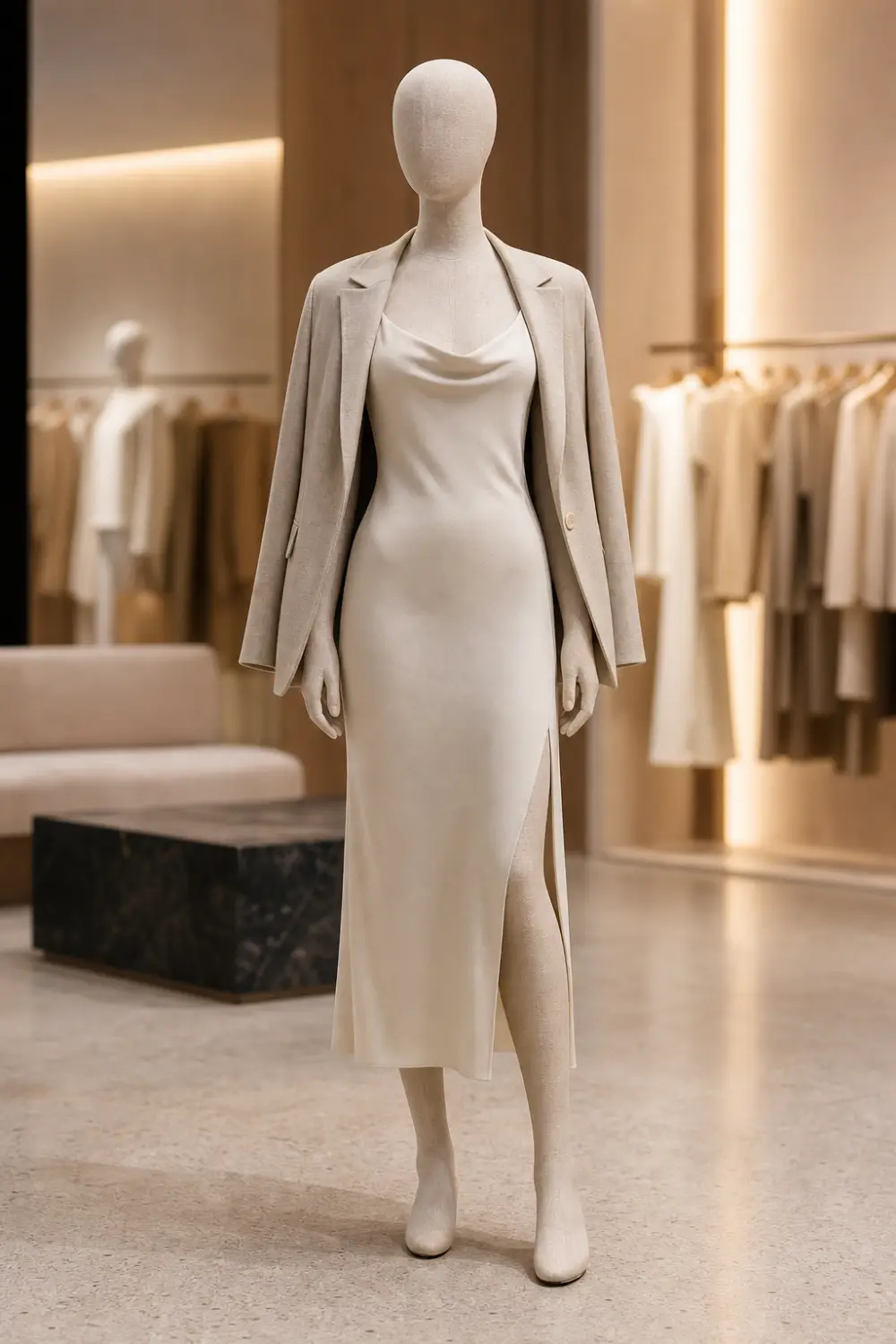
Fabric covered mannequins are a strong choice when a fashion brand wants a softer, more tactile retail presentation than glossy fiberglass. Before sampling, buyers should confirm the garment category, body proportion, fabric texture, color direction, base style, and expected display environment. A good sample should not only look attractive in isolation; it should also support the garments, match the store concept, and be repeatable for bulk production. For premium retail projects, the most important decision is not only the fabric itself, but how the fabric, body line, shoulder shape, and finish work together under store lighting.
Definition
A fabric covered mannequin is a retail display mannequin finished with a textile surface such as linen-style fabric, velvet-style fabric, or other selected covering material. It is used to create a warm, refined, and less commercial-looking presentation for apparel displays. Compared with a high-gloss mannequin, the surface absorbs light and can make garments feel more tactile and curated.
What This Means for Fashion Retail Buyers
For buyers, the main question is whether the mannequin supports the visual identity of the collection. A neutral fabric finish may suit understated boutique interiors, while a deeper color can create a stronger window display. Before requesting a sample, brands should share reference images, target garment types, store mood, preferred fabric color, quantity range, and delivery requirements. This helps the supplier avoid a sample that looks good but does not fit the real project.
Key Options Compared
| Option | Best For | Buyer Checkpoint |
|---|---|---|
| Neutral linen-style covering | Premium everyday boutique display | Check if the tone works with both light and dark garments. |
| Velvet-style covering | Stronger seasonal or window presentation | Confirm pile direction, color depth, and lint visibility. |
| Custom fabric color | Brand-specific retail concepts | Approve a real swatch before sample production. |
| Minimal base | Clean floor presentation | Check stability with the intended garment weight. |
How to Choose the Right Fabric Covered Mannequin
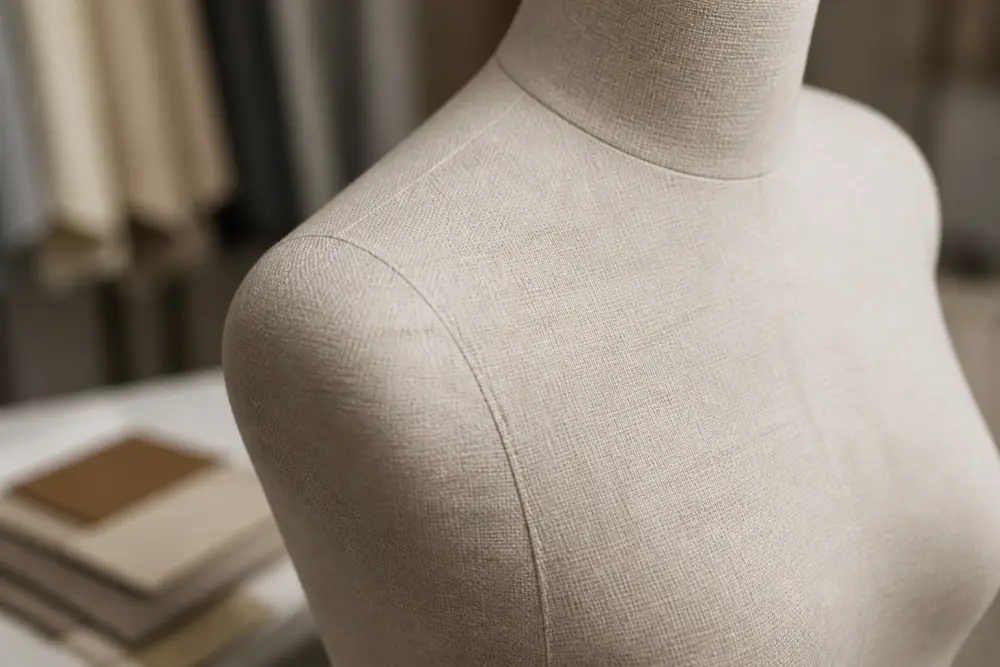
Start with the garment category. Structured coats, tailored suits, eveningwear, casualwear, and lightweight dresses may need different shoulder slopes, waist definition, and stance. Then compare the mannequin against the store environment. In premium retail display projects, fabric texture and body proportion often affect the final visual result more than buyers expect. A fabric that looks subtle in a sample room may appear warmer, darker, or more textured under boutique lighting.
Buyers can review XINTU’s custom fabric covered mannequins to understand the direction of this product category, then send project references before asking for a quote.
Customization Options to Confirm Before Sampling
- Body proportion: Confirm gender, height impression, shoulder width, waist line, hip shape, and posture.
- Fabric direction: Confirm texture, color, thickness, and whether the finish should look matte, warm, or refined.
- Head and arm style: Decide whether the display needs abstract head, realistic head, no head, fixed arms, or wooden arms.
- Base style: Confirm floor plate size, rod position, stability, and the visual impact of the base.
- Sample approval: Review fabric, proportion, balance, seams, and garment fit before bulk production.
For projects that combine fabric bodies with movable hands, buyers can also compare fabric covered mannequins with wooden arms. For broader store planning, review XINTU’s retail display mannequin options before finalizing the sample brief.
Common Mistakes Buyers Should Avoid
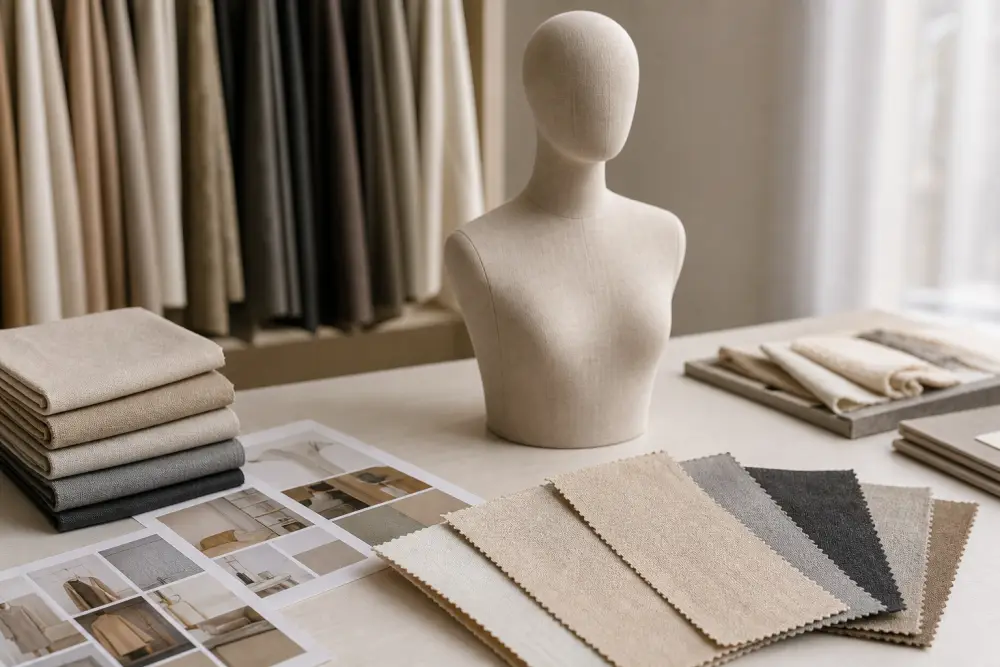
One common mistake is choosing fabric only from a digital color image. Fabric color should be approved through swatches whenever possible. Another mistake is ignoring garment weight. Heavy coats or layered styling may need stronger stability than lightweight garments. Buyers should also avoid treating all fabric covered mannequins as interchangeable. A small change in shoulder line or waist shape can affect how premium the garment looks in store.
Buyer Checklist
- Share reference images of the retail concept and preferred mannequin mood.
- Confirm garment category and typical styling weight.
- Approve fabric swatches before sample production.
- Check body proportion, shoulder line, and stance in sample photos.
- Confirm base stability and visual style.
- Record changes before bulk production begins.
Key Takeaway
The best fabric covered mannequins are chosen by project fit, not by surface material alone. For a premium retail result, buyers should confirm fabric, proportion, base, and sample details before committing to bulk production.
Why Work with XINTU
XINTU focuses on custom mannequins and retail display solutions for fashion retail projects. As a custom mannequin manufacturer, XINTU can review reference images, quantity, fabric preference, display concept, and delivery requirements before preparing a project quotation.
Plan Your Custom Mannequin Project
To start a custom project, contact XINTU for a custom display project and send reference images, quantity, fabric preference, display concept, and delivery requirements. A clear brief helps the sample stage move faster and reduces avoidable revisions.