

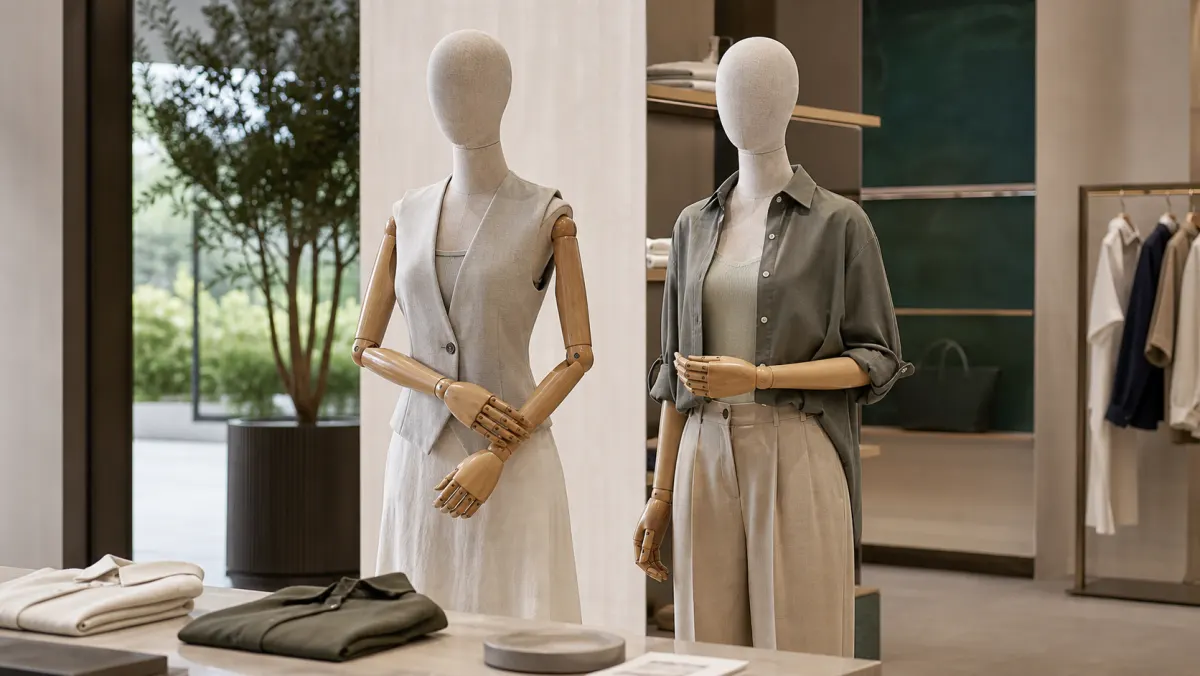
Wooden arm mannequins are especially useful when a boutique needs to show layered outfits with natural sleeve shape, hand position, and accessory placement. A standard static arm can display a garment, but an articulated wooden arm gives visual merchandisers more control over how jackets, knitwear, shirts, scarves, and bags sit together. For premium retail, this control can make a layered look feel intentional instead of bulky. Buyers considering mannequins with wooden arms should evaluate the arm movement, wood finish, hand scale, and how the pose supports the garments that will be shown most often.
Definition: What Makes Wooden Arm Mannequins Different?
Wooden arm mannequins combine a display body, often fabric covered, with articulated wood arms and hands. The arms can usually be adjusted at key points such as the shoulder, elbow, wrist, and hand direction. This makes them different from fixed-arm mannequins because the display team can create a more natural pose for layered garments.
The wood also becomes part of the store’s material language. Natural wood can feel warm and crafted, while darker or more polished finishes can support a sharper boutique environment. When paired with fabric covered mannequins, wooden arms can add tactile contrast without making the display look casual.
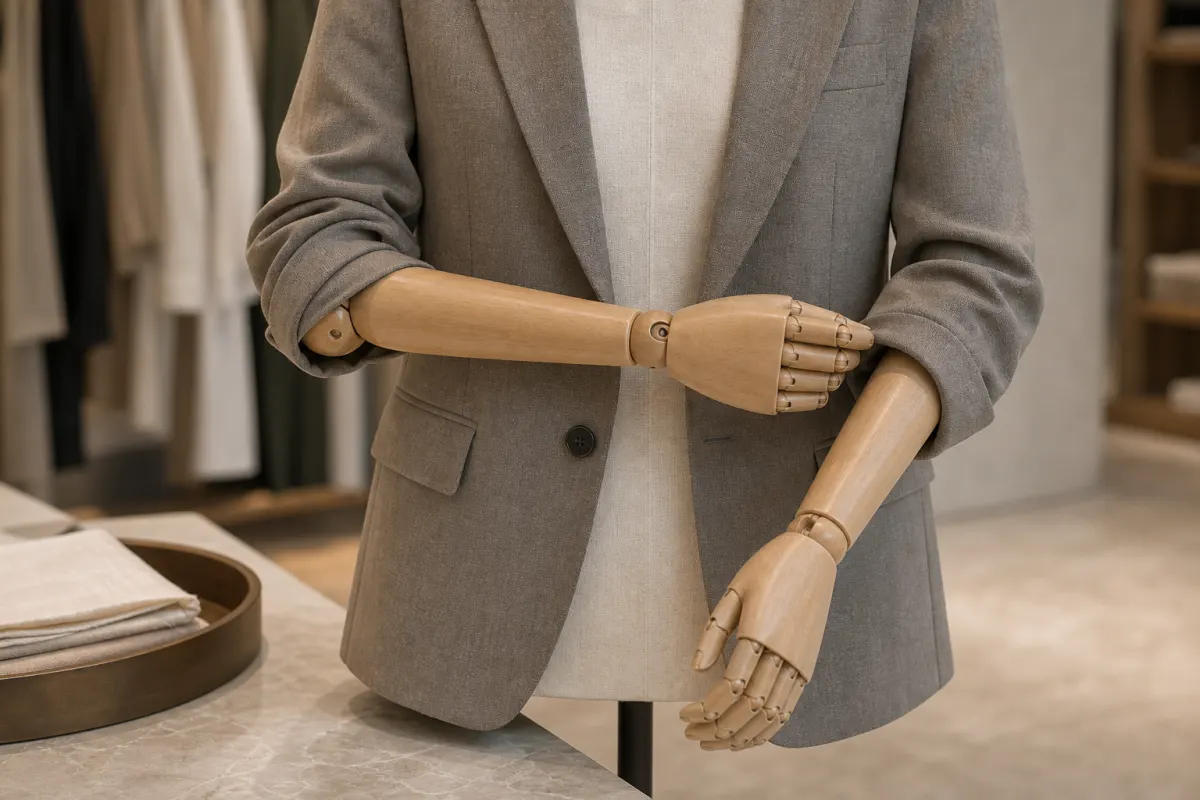
Comparison: Fixed Arms vs Articulated Wooden Arms
| Display Need | Fixed Arms | Articulated Wooden Arms |
|---|---|---|
| Layered sleeves | Limited control over cuff and sleeve fall | Adjustable elbow and wrist position for cleaner styling |
| Accessories | May require separate props | Can hold or frame bags, scarves, and small accessories naturally |
| Seasonal styling | Same pose across many displays | More pose variation for changing collections |
| Premium material effect | Depends mainly on body finish | Wood grain and hand finish add visible craft detail |
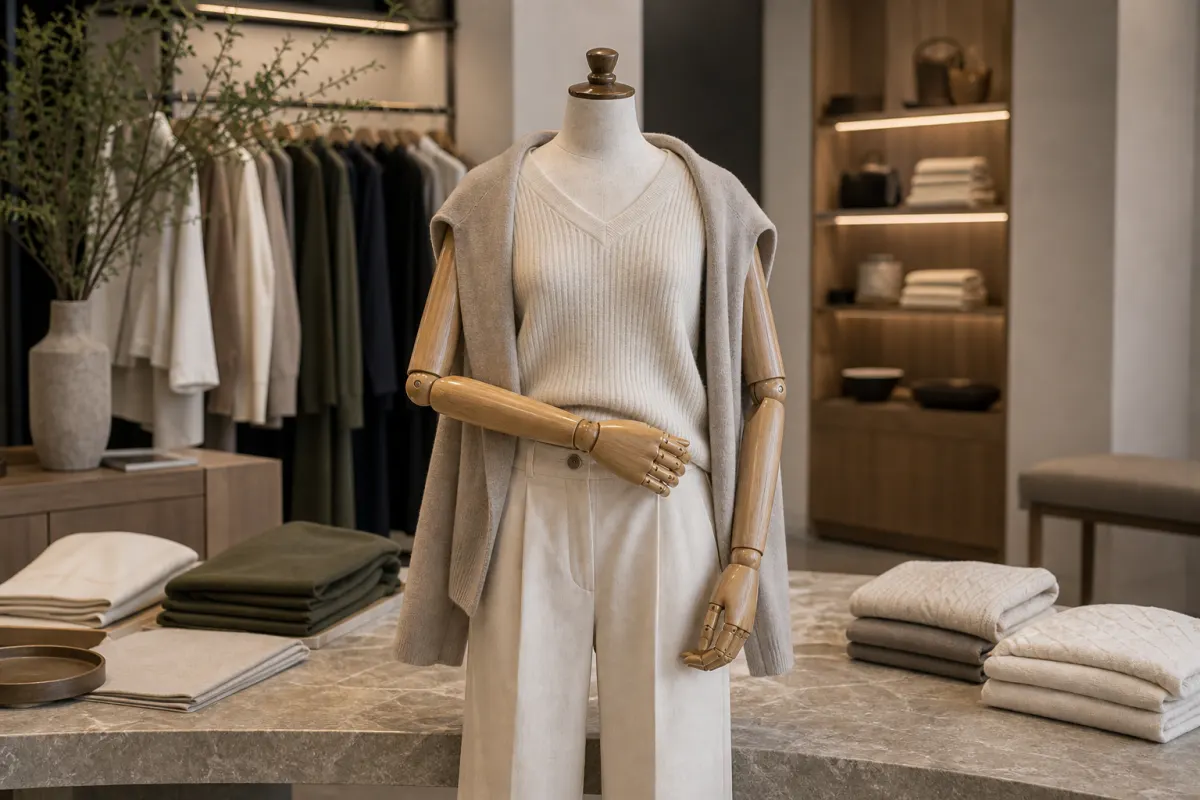
Buyer Checklist
- Test the arms with the thickest layered outfit expected in the store.
- Check whether the hand scale looks refined beside sleeves, bags, and jewelry.
- Confirm that the elbow and wrist can hold useful positions without looking stiff.
- Review wood tone against fixtures, floors, hangbars, and other store materials.
- Ask whether the same arm finish can be repeated across future orders.
- Photograph the sample from front, side, and customer walking angles.
Key Takeaway
Wooden arm mannequins are not only a decorative detail. They are a practical styling tool for boutiques that sell layered outfits, accessories, and premium seasonal edits. For buyers developing custom mannequins, arm movement and hand finish should be reviewed together with the body proportion, fabric covering, base, and garment category.
Browse the full wooden arm mannequins collection
If your boutique display relies on layered outfits or accessory styling, share your garment types and preferred wood finish through the XINTU contact page for a more precise wooden arm mannequin discussion.
Female models built for layered styling with adjustable arms: Full Body Fabric Mannequin with Wooden Arms, White Fabric Covered Female Mannequin with Wooden Arms, Beige Linen Female Mannequin with Wood Arms