
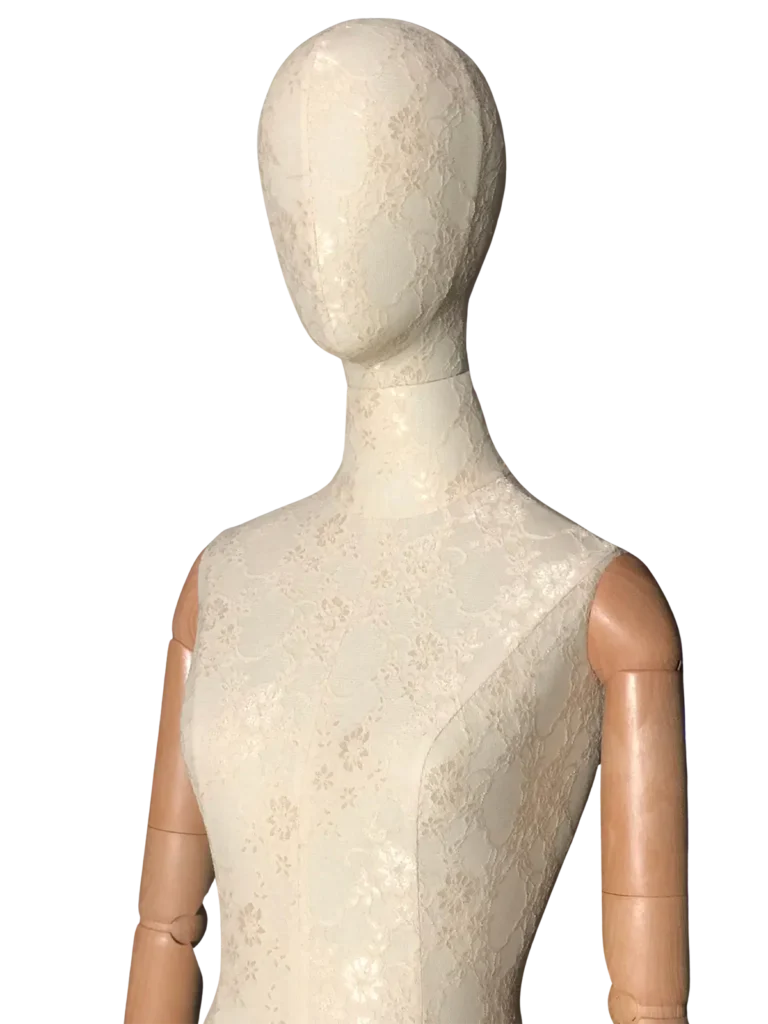
Wedding Dress Mannequins: How Bridal Boutiques Choose the Right Display Form
Which mannequin suits wedding gowns and groomswear, how to check the base, cover and pinning, the most common display mistakes, and how a custom order works.

Your blog category
Which mannequin suits wedding gowns and groomswear, how to check the base, cover and pinning, the most common display mistakes, and how a custom order works.
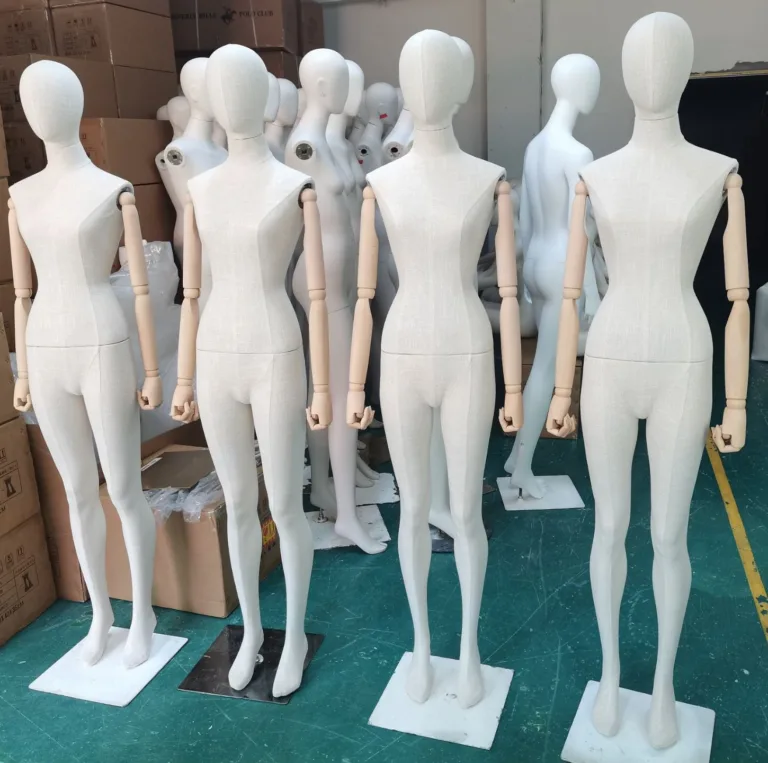
A display mannequin is the retail figure that shows garments in stores, windows and product photos. This guide covers half-body vs full-body, fabric-covered vs fiberglass, what sets the price, and which buying channel fits a marketplace order, a local fixture dealer or factory-direct custom work, including notes for buyers in Taiwan.
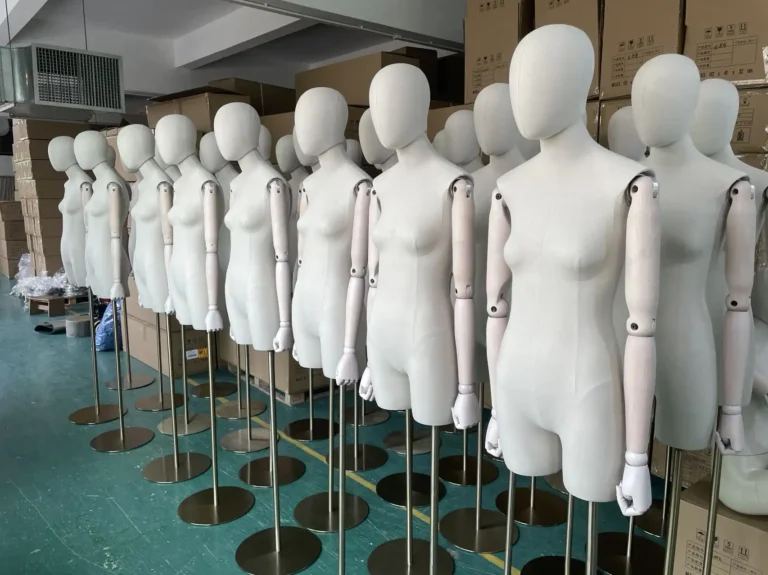
A custom mannequin has no list price. The cost is set by five factors: form, fabric, arms, base and quantity. Here is how each one moves the price, and how the sample fixes it before production.
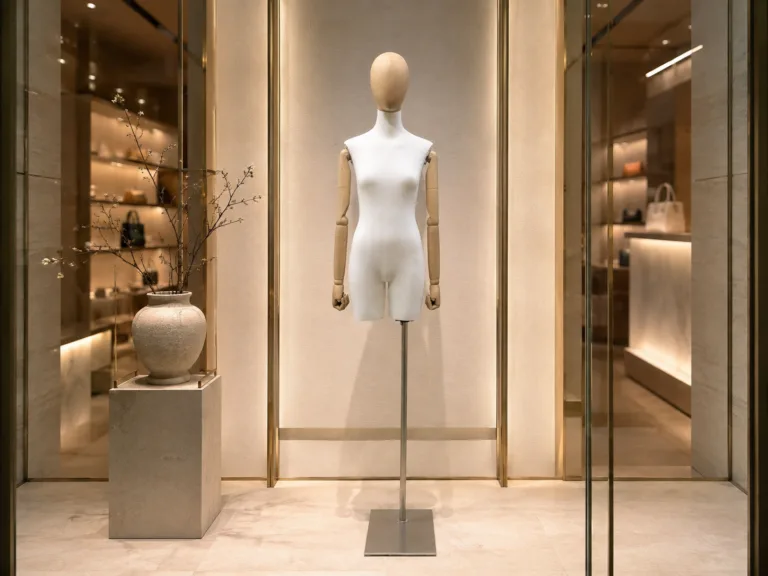
Two fashion brands can use nearly identical mannequins and still get very different results. Body proportion, shoulder line, torso length and pose all affect garment fit and silhouette.
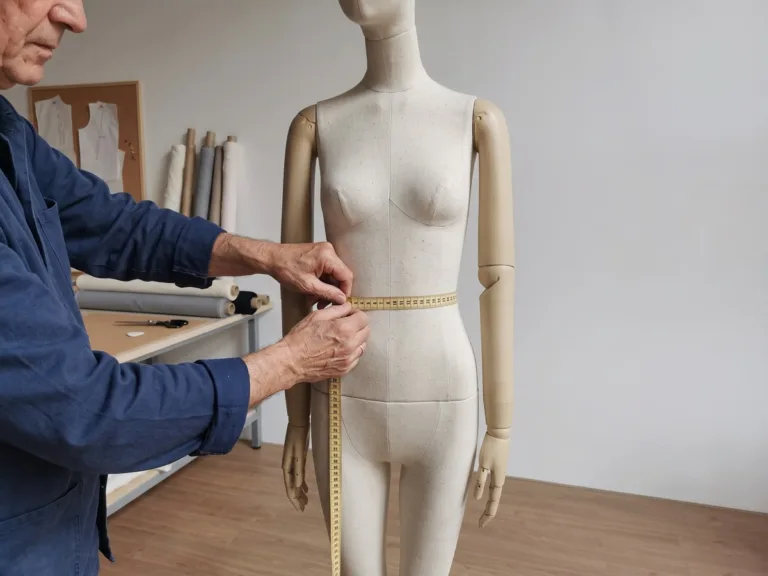
A step-by-step guide to custom mannequin projects, in the order a real project moves: retail scenario, body dimensions measured against real garments, pose, surface fabric, arms and head, base, sample approval, and how consistency is held across mass production and multi-store rollouts.
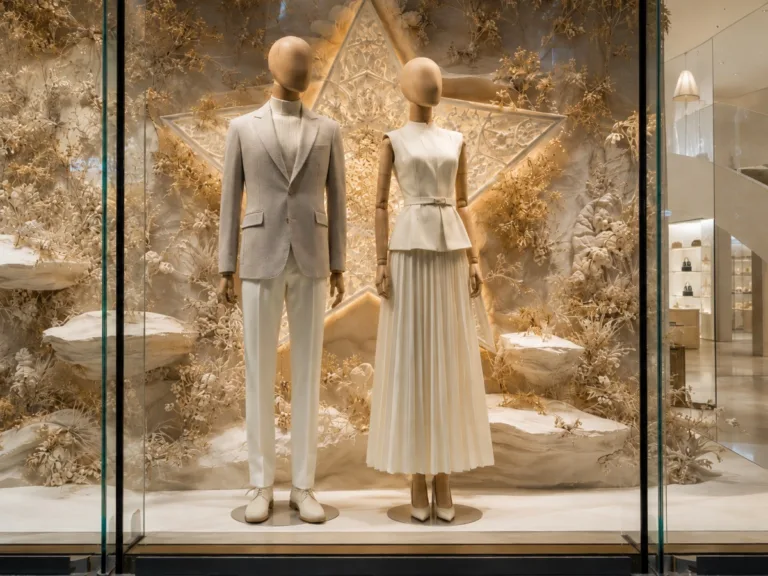
Pose, proportions, surface material and color shape how customers read a brand before they touch a garment. Leading brands plan mannequins alongside store design, lighting and window concepts.
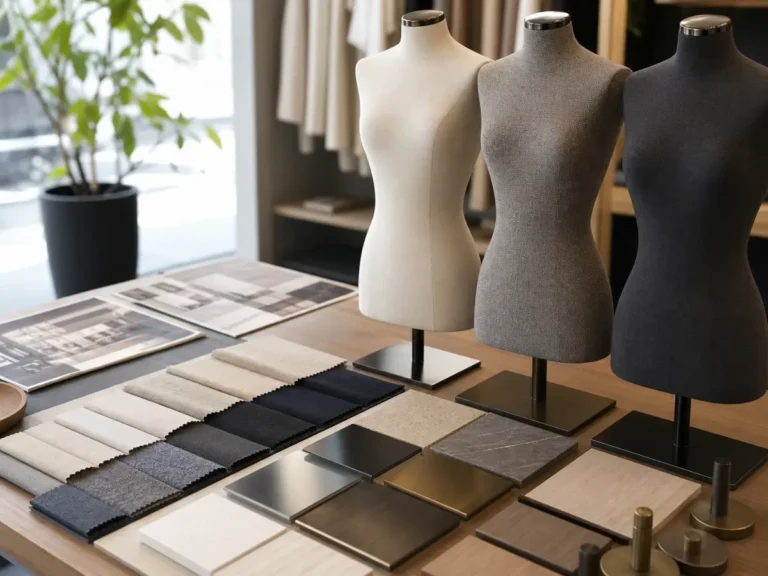
Use a material board to approve fabric, base finish, lighting compatibility, and store palette before custom retail mannequin sampling.