

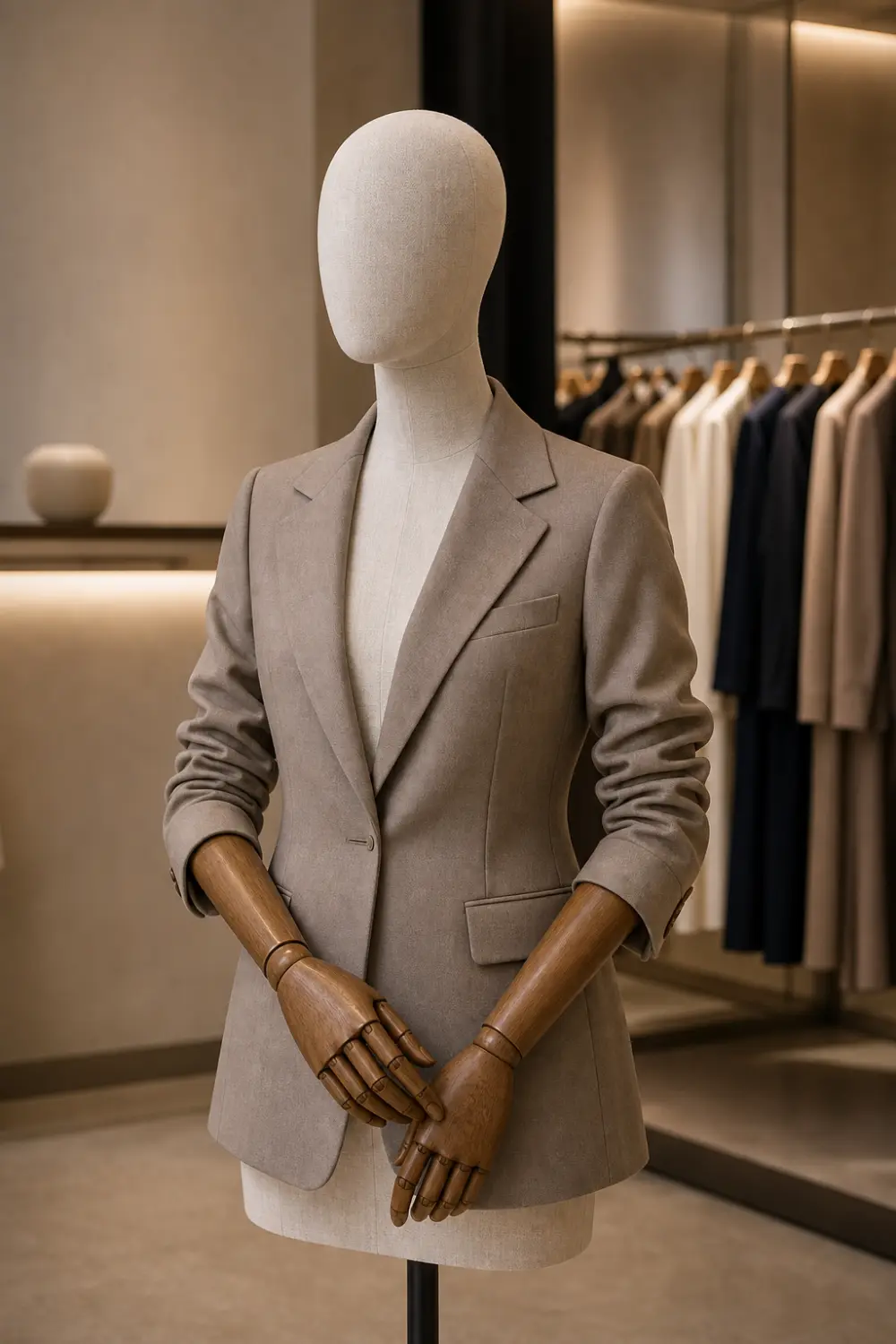
The main reason boutiques choose mannequins with articulated wooden arms is posing. Because the shoulder, elbow, wrist, and fingers can each be adjusted, one mannequin can take many different poses: a hand on the hip, an arm carrying a bag, or a gesture toward the next figure in the window. Visual merchandisers can restyle jackets, shirts, knitwear, and layered outfits for every new collection without buying new mannequins. Before choosing them, buyers should confirm garment type, pose range, arm and hand finish, body proportion, and how often staff will adjust the display.
One Mannequin, Many Poses
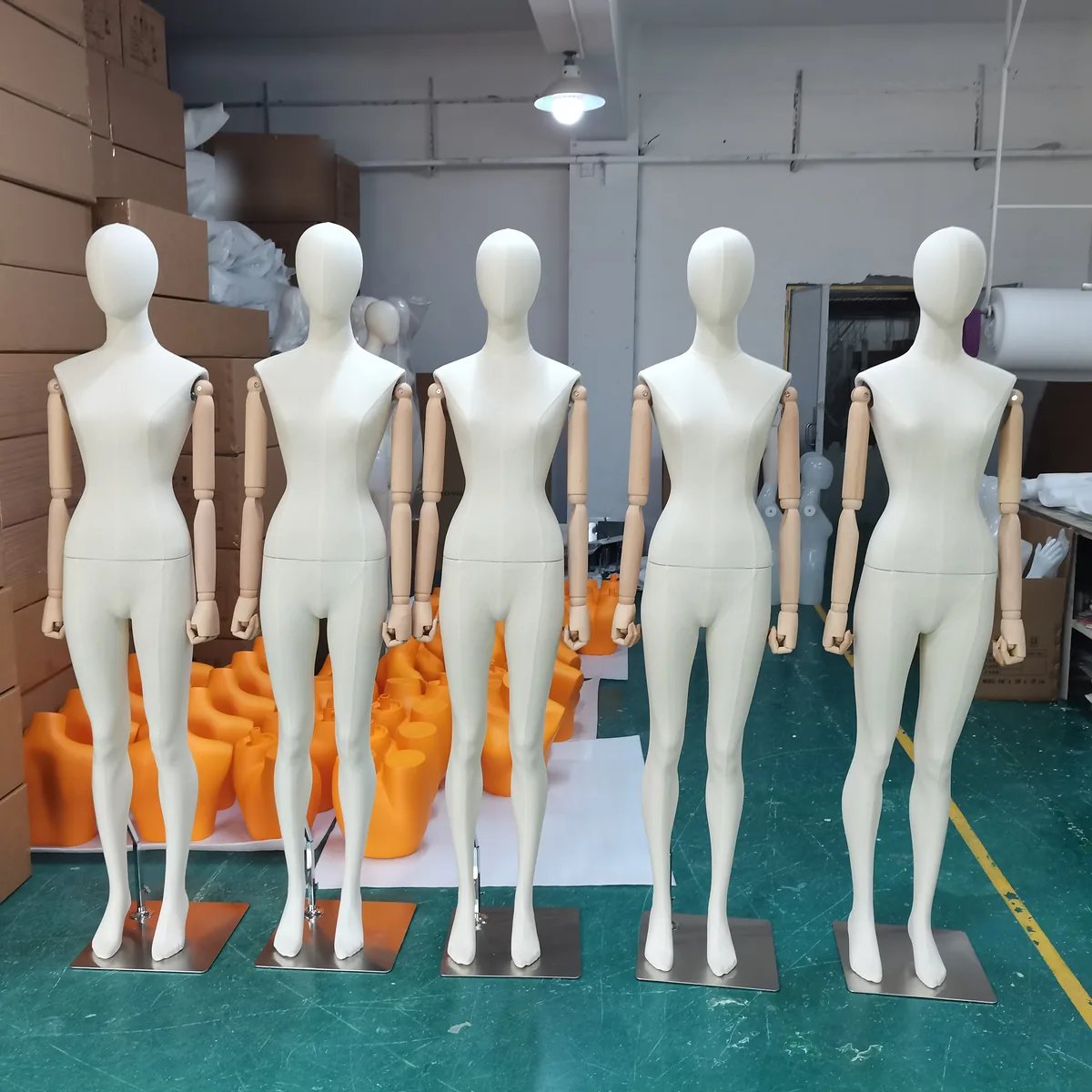
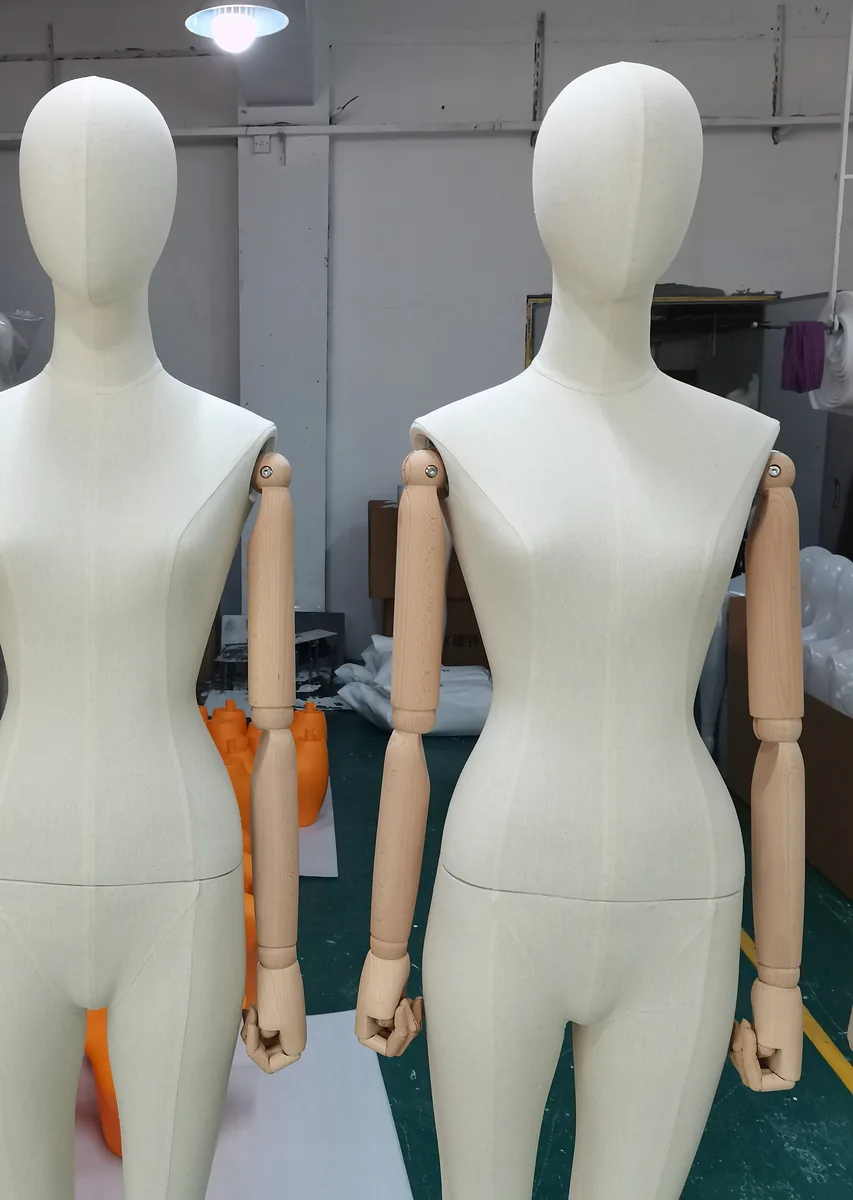
Articulated wooden arms have movable joints at the shoulder, elbow, and wrist, and jointed fingers are also available. Each joint can be set on its own, so a pose is built step by step and can be changed whenever the display changes. For a quieter look, some brands choose a one-piece hand with fixed fingers. Most clients choose unlacquered beech, and plastic arms can also be made.
Poses that boutique teams often use include:
- A hand resting on the hip or slipped into a jacket pocket.
- Arms crossed, or one hand touching a collar, lapel, or cuff.
- A bent arm carrying a handbag, tote, or folded coat.
- Fingers framing a scarf, belt, glove, or piece of jewelry.
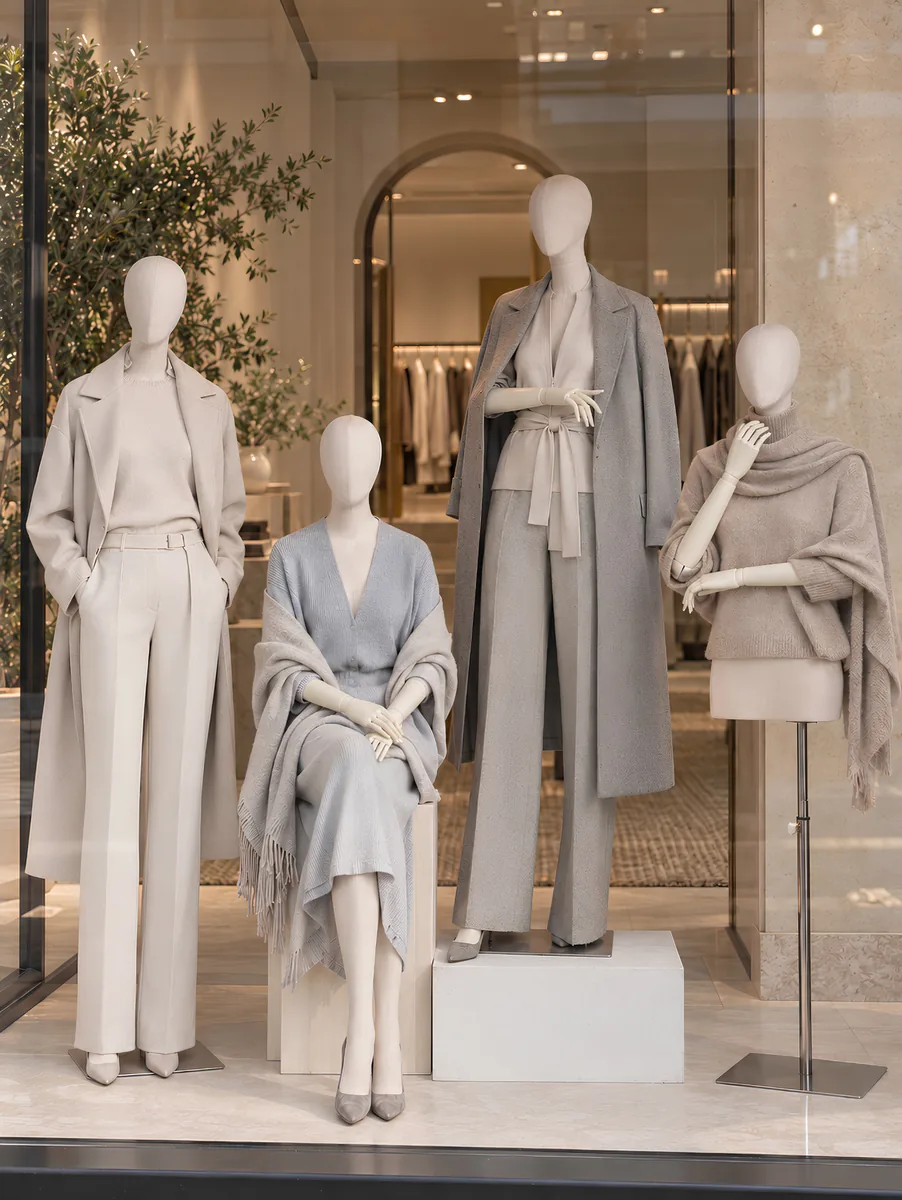
- An arm reaching toward the next mannequin, so a window group reads as one scene.
Why Boutiques Choose Wooden Arms
- More looks from one form: The same mannequin can be re-posed for each collection, season, or campaign, so changing the windows does not mean buying a new set of fixed-pose mannequins.
- Natural garment presentation: A slight bend at the elbow or wrist lets sleeves, cuffs, and jacket fronts fall the way they do on a person.
- Accessories without extra props: Hands and fingers can hold or frame bags, scarves, gloves, and jewelry.
- Easier dressing: Plug-in arms come off the shoulder in seconds, and the elbow and wrist bend, so sleeves slide on and off without forcing the hand.
- Windows that draw attention: Varied gestures, and poses that interact across a group, make a display feel alive rather than static.
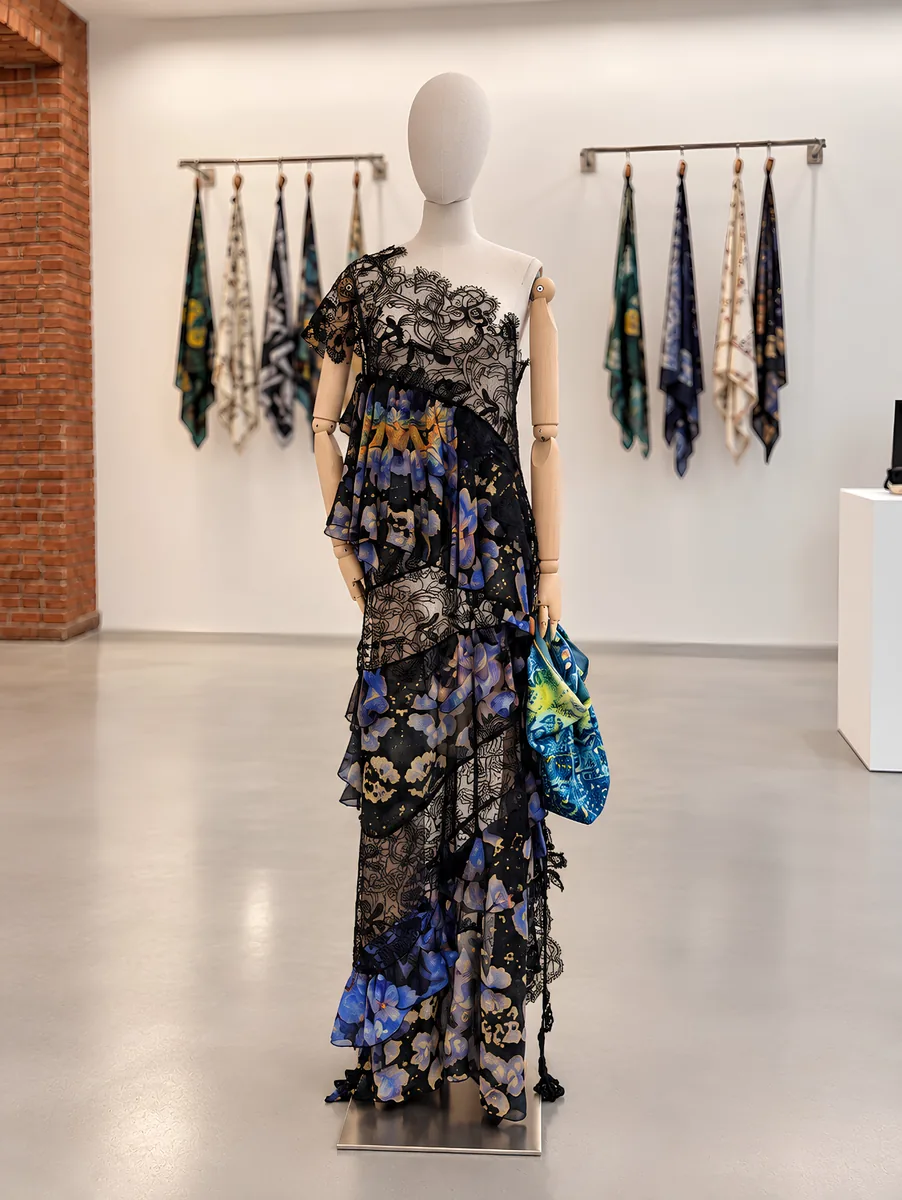
The wood also becomes part of the store’s material language. Natural wood can feel warm and crafted, while darker or more polished finishes can support a sharper boutique environment. When paired with fabric covered mannequins, wooden arms can add tactile contrast without making the display look casual.
Fixed Arms, Articulated Arms, or No Arms?
| Arm Option | Best For | What to Check |
|---|---|---|
| Fixed arms | One set pose with little handling | Limited control over sleeves, cuffs, and accessories. |
| Articulated wooden arms | Many poses from one form, layered looks, and frequent outfit changes | Poses must stay controlled; review joint quality at sampling. |
| No arms | A clean focus on body shape, dresses, or compact floor plans | Less useful for layered outfits or full looks. |
Half-body and full-body forms can be made with or without arms, so the same body can be ordered in both versions for different areas of a store.
Where Articulated Arms Add the Most Value
They are best for boutique projects that rotate styling often or rely on a more crafted presentation. Menswear soft tailoring, premium outerwear, and layered womenswear usually benefit more than basic uniform displays.
Wooden arms make it easier to open a sleeve line, present a cuff, support a handbag, or create a relaxed but deliberate stance. For stores already using the fabric mannequin category, articulated arms can extend the display language without changing the whole visual system.
How to Style Layered Outfits
- Bend the elbow slightly so a jacket sleeve falls cleanly over a knit or shirt cuff.
- Use the wrist and fingers to frame a bag strap, scarf, or pocket rather than to carry heavy items.
- Vary the pose between seasonal collections instead of repeating the same gesture in every window.
Options to Confirm Before Sampling
- Joints: Shoulder, elbow, and wrist joints are standard. Confirm whether you need jointed fingers or a one-piece hand.
- Arm style and length: XINTU offers several wooden arm styles, each with its own length. A custom length or shape is possible for an additional charge.
- Material and finish: Most clients choose unlacquered beech, sanded in three stages: coarse, fine, and final. Clear lacquer or wood wax oil can be added, and any custom color is possible. Plastic arms are also available.
- Shoulder connection: Spring, metal plug-in, magnetic plug-in, or metal hanger. See how each shoulder connection works.
- Body and fabric: Match the arms with the body shape, fabric covering, and base.
- With or without arms: Decide which positions in the store need arms and which can use armless forms.
- Display frequency: If staff often restyle outfits, arm durability and ease of adjustment matter.
Common Mistakes Buyers Should Avoid
A common mistake is choosing wooden arms because they look premium in a photo, without checking whether the team needs pose flexibility. Another mistake is using exaggerated gestures. In high-end displays, a subtle bend can look better than a dramatic pose. Buyers should also confirm whether the arm joints can hold the intended position after repeated styling.
Buyer Checklist
- List the garment types that require sleeve or accessory styling.
- Define the preferred pose mood: formal, relaxed, editorial, or minimal.
- Confirm whether frequent outfit changes are part of the display plan.
- Test the arms with the thickest layered outfit expected in the store.
- Review wood tone against fixtures, floors, hangbars, and other store materials.
- Review sample photos from front, side, and close-up views.
- Confirm quantity, packing, and delivery requirements before bulk order.
Frequently Asked Questions
Can wooden mannequin arms hold a handbag?
Yes. Articulated wooden arms can hold a handbag or other accessories weighing up to about 3 kg. For heavier items, use a display table or stand instead.
What wood are mannequin arms made of?
Most are beech. XINTU arms are usually left unlacquered after three rounds of sanding: coarse, fine, and final. Clear lacquer, wood wax oil, or a custom color can be applied on request.
Can the fingers move?
Yes, jointed fingers are available. Some brands prefer a one-piece hand with fixed fingers for a quieter look.
Can a mannequin be ordered without arms?
Yes. Most half-body and full-body forms can be made with or without arms.
Can the arm length be customized?
Yes. XINTU offers several arm styles in different lengths, and a custom length or shape is available for an additional charge.
Next Step: Joint Quality and Care
Once wooden arms are the right choice, the next step is checking how the joints move, hold, and age with daily styling. See our guide to wooden arm mannequin joint quality and care.
Key Takeaway
Wooden arm mannequins are most valuable when they solve a styling problem. They help boutiques create controlled, natural garment presentation, but the pose, finish, and joint quality must fit the project.
Why Work with XINTU
XINTU supports custom mannequin projects for premium retail display. Buyers can compare premium retail mannequin display directions and share a display brief before sampling.
Plan Your Custom Mannequin Project
Browse the full wooden arm mannequins collection
Models often chosen for layered styling: White Linen Female Torso with Head and Wooden Arms, Full Body Fabric Mannequin with Wooden Arms, White Fabric Covered Female Mannequin with Wooden Arms, Beige Linen Female Mannequin with Wood Arms, Fabric Mannequin Set with Wooden Arms.
To evaluate wooden arms for your retail project, contact XINTU for custom mannequin guidance with reference images, garment categories, desired arm positions, quantity, and delivery schedule.