


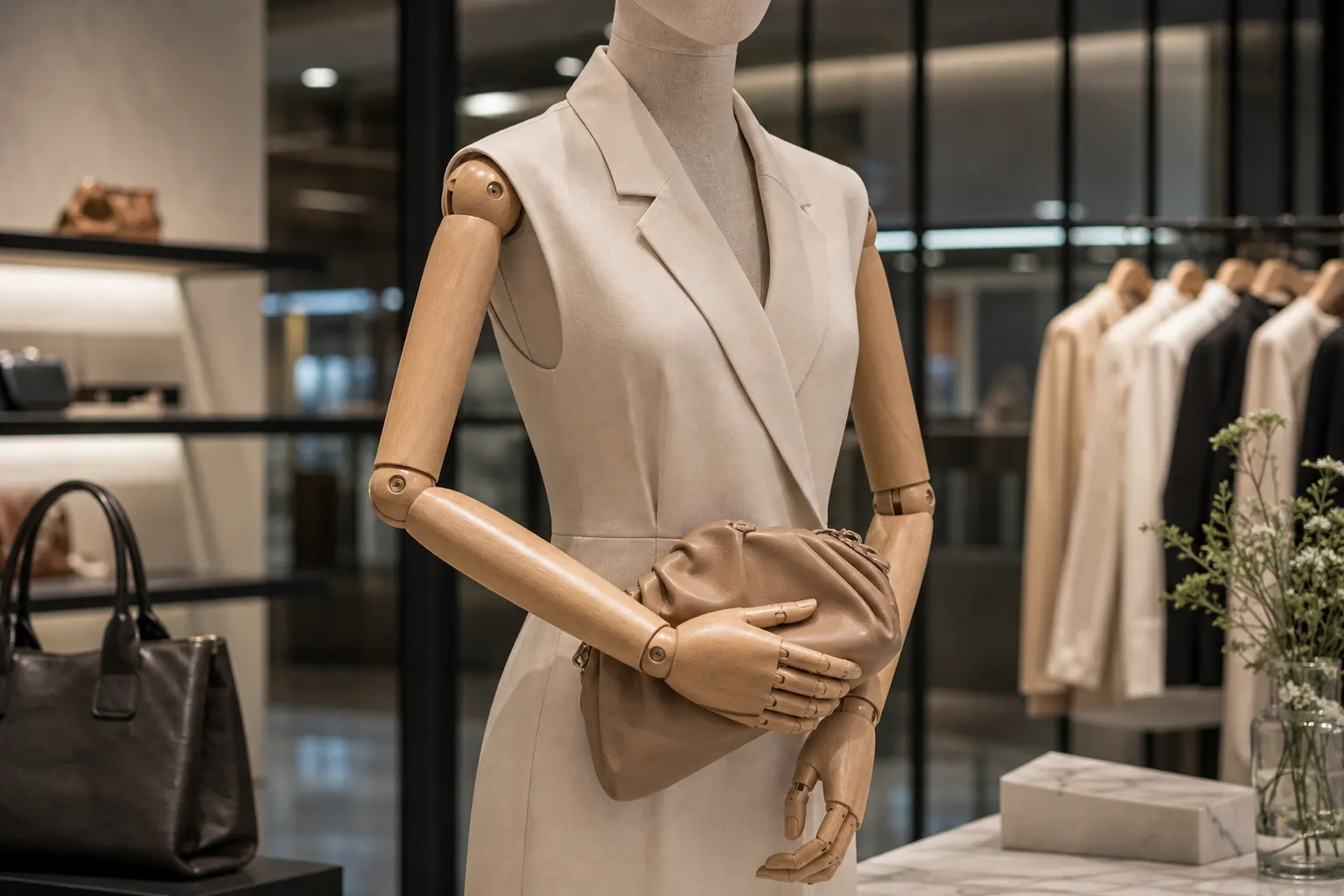
Boutique buyers should check wooden arm mannequin joint quality by looking at movement control, holding stability, finish consistency, gap alignment, and how the arms behave during real garment styling. Good joints should move with enough flexibility to support display changes, but not feel loose, noisy, or visually rough. This matters because articulated wooden arms are often chosen for premium stores precisely to improve gesture, sleeve shape, and accessory styling. If the joints are weak or inconsistent, the mannequin quickly stops looking refined. A buyer does not need to inspect the mechanism like an engineer. The practical goal is simpler: confirm that the joints look clean, move predictably, and hold premium-looking poses without distracting from the garments.
Definition
Wooden arm mannequin joint quality refers to how well the shoulder, elbow, wrist, and hand connections are built, finished, and controlled for repeated retail styling use.
Why Joint Quality Matters More Than Appearance Alone
A polished wood tone may look premium in a catalog image, but boutique teams usually discover the real difference when they start adjusting sleeves, cuffs, bags, or layered looks. Joint quality affects both styling speed and final presentation.
Key Checkpoints Compared
| Checkpoint | What Good Looks Like | Warning Sign |
|---|---|---|
| Range of motion | Enough movement for planned styling without strain | Joints stop too early or force awkward poses. |
| Pose stability | Arms hold a natural sleeve line after adjustment | Arms drift, sag, or rotate unexpectedly. |
| Visual finish | Clean transitions and consistent wood treatment | Visible gaps, rough edges, or mismatched finish. |
| Repeat use | Staff can restyle without stressing the joint | Movement feels fragile or inconsistent. |
How Buyers Should Review a Sample
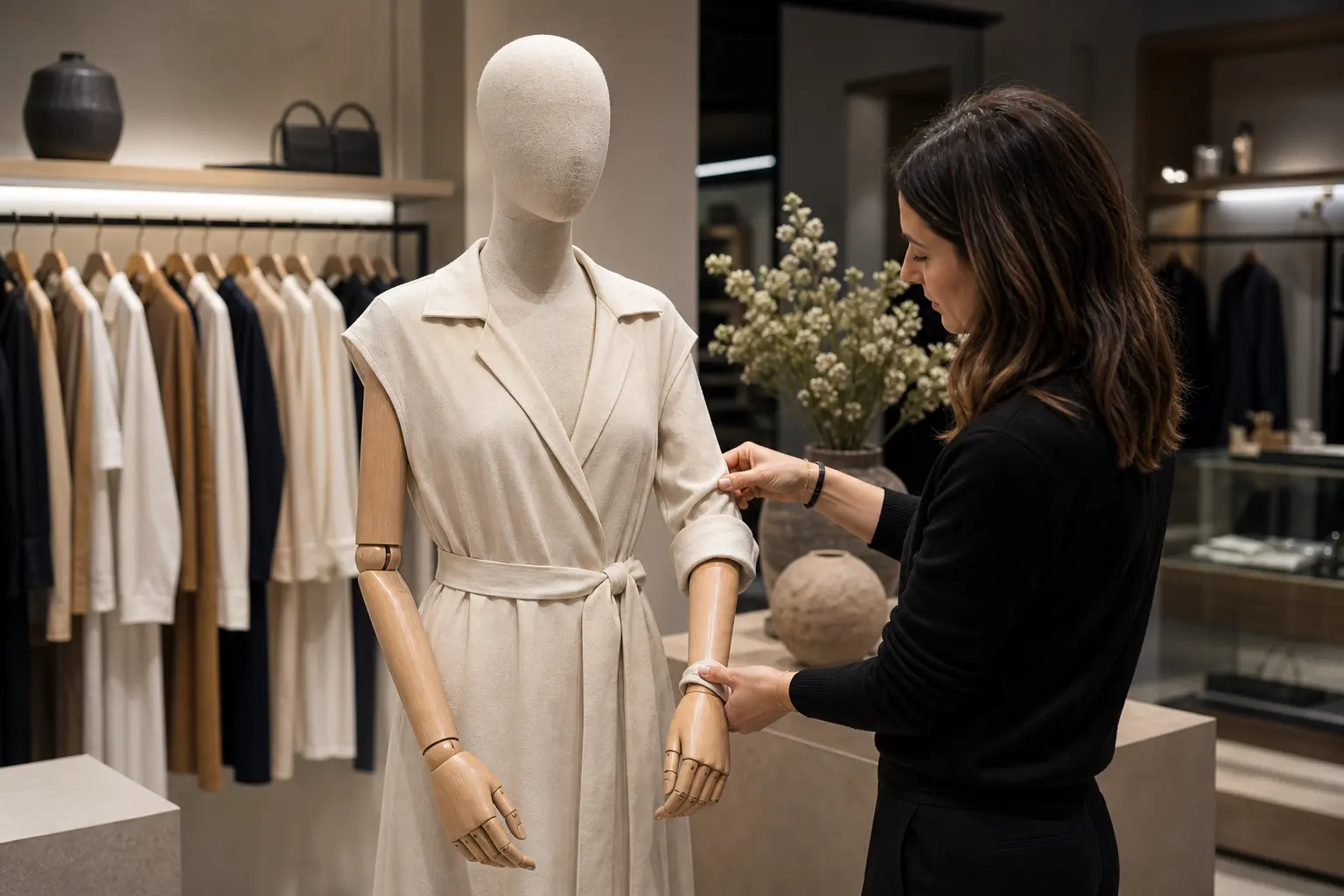
Start with the actual product direction. If the sample is based on a fabric covered mannequin with wooden arms, review the arm joints together with the body finish instead of judging them separately. Then test the joints with the garment types the store will display most often, especially jackets, shirts, and layered looks.
What to Look For During Styling
Teams browsing the fabric mannequin category often focus on body finish first, but the arm structure may be what determines whether the display remains practical in-store. Buyers comparing custom retail display mannequins should check if the arm can support a natural bend, controlled cuff opening, and accessory placement without making the garment look forced.
For jewelry and small accessories, an articulated wooden display hand brings the same joint-quality principles to a smaller display format.
Buyer Checklist
- Move each shoulder, elbow, and wrist through the intended styling range.
- Check whether the arm holds position after several adjustments.
- Inspect close-up finish quality around every visible joint transition.
- Test sleeve drape and accessory support with representative garments.
- Confirm whether repeated store restyling is part of the project brief.
- Record any weak holding points before sample approval.
Key Takeaway
The value of wooden arms comes from controlled styling, not from wood as decoration alone. Buyers should approve articulated arms only when the joints move cleanly, hold naturally, and still look refined at close range.
Supplier Fit Matters Too
When quality expectations are high, it helps to review the XINTU custom mannequin manufacturer context so joint quality, finish direction, and sampling standards can be discussed together.
Plan Your RFQ
Browse the full wooden arm mannequins collection
If joint quality will affect your boutique display result, contact XINTU for mannequin guidance with garment references, preferred pose range, quantity, and sample expectations.
Related guide on wooden arm mannequin maintenance: How to Maintain Wooden Arm Mannequins in Boutique Displays