

Luxury retail displays are built on nuance. Before a customer touches a garment, the store environment already communicates craftsmanship, price point, and brand confidence. That is why more boutiques, fashion brands, and visual merchandisers are replacing standard glossy forms with custom fabric mannequins that feel warmer, softer, and more aligned with premium interiors.
A well-designed fabric covered mannequin does more than support clothing. It improves window storytelling, helps garments photograph better, and creates stronger harmony between apparel, fixtures, and brand identity. In 2026, that consistency matters across in-store display, campaign imagery, and social content.

For brands looking for a more refined presentation, fabric-covered display mannequins offer a clear advantage. Linen, canvas, and velvet-touch finishes reduce glare, add texture, and make the display feel more considered. Instead of competing with the collection, the mannequin supports the garments and reinforces the mood of the store.
Why Luxury Retail Brands Are Moving Away from Standard Mannequins
Standard mannequins can work in mainstream retail, but they often feel too generic in premium spaces. Their glossy finish and repetitive silhouettes can weaken a carefully designed store concept, especially when the interior uses walnut, stone, brushed brass, or warm neutral materials.
A custom mannequin gives retail teams more control. Instead of adapting the visual concept to fit a mass-produced fixture, the fixture can be designed to fit the concept. That helps boutiques and multi-brand stores create a display language that feels more ownable and less commercial.
The Aesthetic Advantage of Fabric-Covered Mannequins
The biggest advantage of a fabric mannequin is restraint. Fabric absorbs light instead of reflecting it, introduces texture instead of glare, and gives the display a quieter architectural presence. This is especially useful for luxury stores where visual softness and material depth directly affect perceived value.
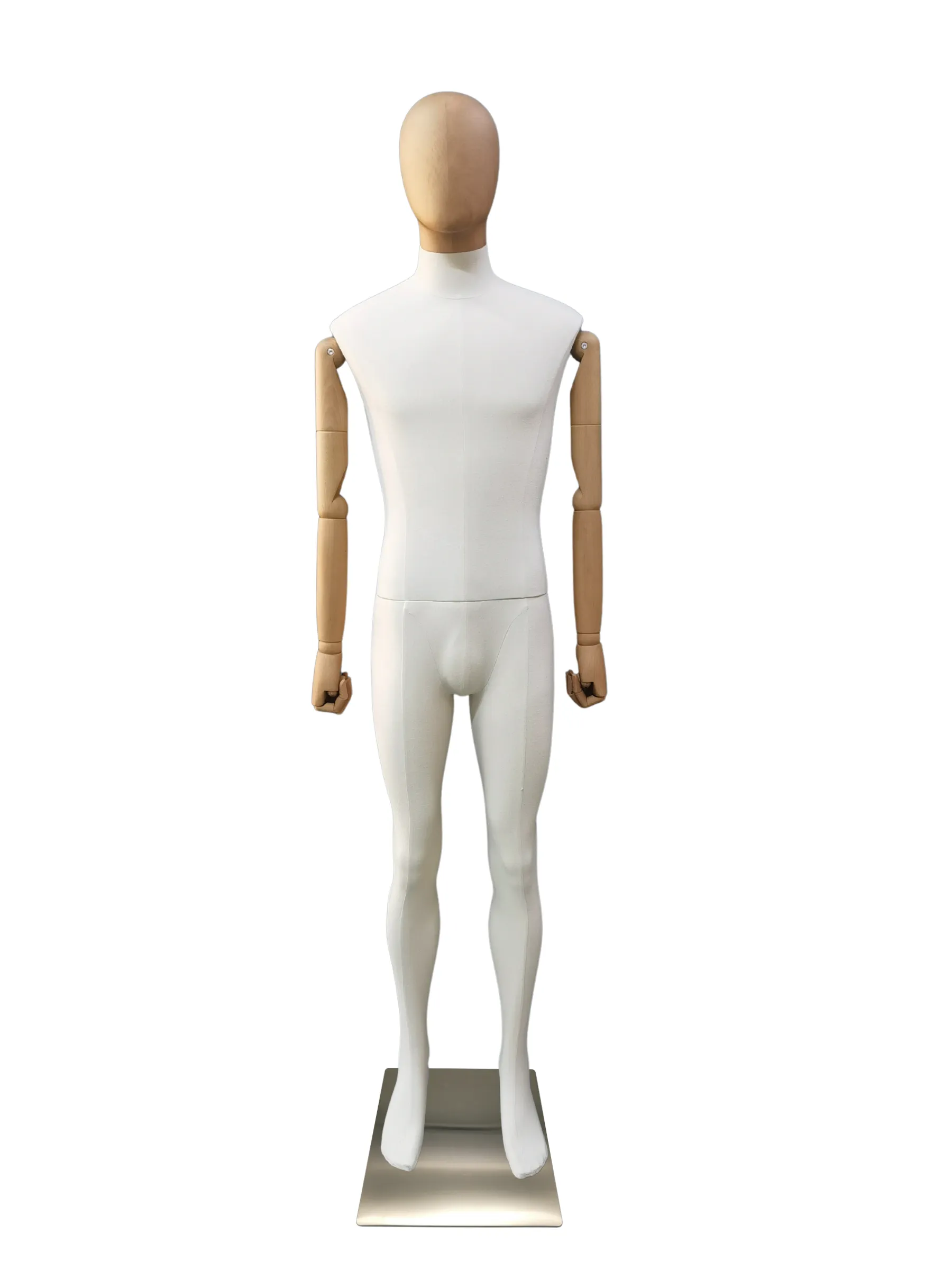
For visual merchandising teams, fabric mannequins for visual merchandising also pair well with wood arms, metal bases, upholstered risers, and other premium display props. Together, these details create a presentation that feels editorial rather than transactional.
How Customization Improves Display Performance
The best projects treat the mannequin as a designed retail object, not a generic accessory. Customization can include fabric finish, color, body proportions, pose, arm style, neck block, and base details.
Those decisions influence how garments drape, how the display reads from a distance, and how well the mannequin fits the wider store environment. Linen and matte woven finishes often suit minimalist luxury interiors, while more textured finishes may work better for occasionwear, tailoring, or storytelling windows.
Best Uses in Boutique and Window Displays
Custom fabric mannequins are especially effective in boutiques, luxury window displays, capsule launches, and multi-brand spaces that need a unified premium look. A carefully posed mannequin can help communicate curation, craftsmanship, and premium positioning within seconds.
- Luxury womenswear and menswear boutiques
- Tailoring and formalwear presentations
- Seasonal window campaigns
- Bridal, resort, and occasionwear displays
- Multi-store rollouts that need visual consistency
Frequently Asked Questions
Why are fabric-covered mannequins better for luxury retail?
They usually create a softer, more premium look than glossy standard forms. Fabric reduces glare, adds texture, and fits more naturally into upscale interiors.
Can custom mannequins be matched to store interiors?
Yes. Brands can customize fabric color, texture, pose, arms, and base details so the mannequin feels integrated with the wider retail concept.
Are custom fabric mannequins good for window displays?
Yes. They are highly effective in windows because they communicate premium positioning quickly and support stronger storytelling through pose and materiality.
Key Takeaways
- Custom fabric mannequins improve luxury retail presentation through texture, restraint, and visual cohesion.
- They help align garments, interiors, window displays, and digital brand imagery.
- Material, pose, and base details all influence how premium a retail display feels.
If you are planning a boutique upgrade or a branded display rollout, the right retail display mannequin can improve both presentation quality and brand perception. Combined with bespoke display solutions, a custom fabric form becomes part of the brand experience rather than just a fixture.
Buying Questions Fashion Brands Often Ask
What details should brands confirm before ordering a custom fabric mannequin?
Most teams should confirm garment category, target customer, display location, preferred pose, fabric finish, arm style, base type, and rollout quantity before final sampling. These details affect both production consistency and display results.
Are custom fabric mannequins suitable for multi-store rollouts?
Yes. They are often a strong option for chains and regional rollouts because brands can standardize the silhouette and finish while keeping interchangeable bases, arms, or poses for different store formats.
How do custom mannequins help visual merchandising teams?
They make styling more intentional, improve store-to-store consistency, and create stronger alignment between window display, interior merchandising, and brand photography.