

How to Customize Custom Clothing Mannequins: 5 Practical Tips for Store Window Displays
When it comes to custom clothing mannequins, many fashion brands and boutique owners assume the process is complicated or expensive. In reality, mannequin customization is often much more flexible than expected — especially when you work directly with an experienced manufacturer.
Below is a simple and practical guide based on real factory experience, designed to help brands make better decisions for store window displays and in-store presentation.
1. Start With Reference Images If You Already Have a Style in Mind
If you already have a mannequin style you like, the easiest approach is to send reference images or basic requirements directly to a manufacturer.
Most mannequin factories maintain hundreds or even thousands of existing designs. Many of these models were developed for domestic and international fashion brands, often with high development costs and long-term use in real retail environments.
In many cases, manufacturers can provide:
- The same mannequin model
- A very similar design
- Or a proven base model that can be adjusted
This method saves time, reduces development risk, and keeps costs under control.
2. Not Sure Which Mannequin Fits Your Brand? Let the Factory Recommend
If you are unsure which mannequin works best for your brand, simply share key information with the manufacturer, such as:
- Brand positioning
- Target customers
- Store interior or window display style
- Or which fashion brand your concept is closest to
The more specific your information is, the easier it becomes for the factory to recommend suitable custom clothing mannequins that align with your visual identity.
This is a common and efficient approach used by many fashion brands.
3. Easy Customization Without Changing the Mannequin Structure
Once a mannequin style is confirmed, several custom options are available without changing the pose or body size, including:
- Surface paint color
- Fabric selection for fabric-covered mannequins
- Wooden arms: material, color, arm style, and shoulder connectors
- Base options: shape, material, finish, and logo engraving
These adjustments are relatively simple, with predictable costs and lead times.
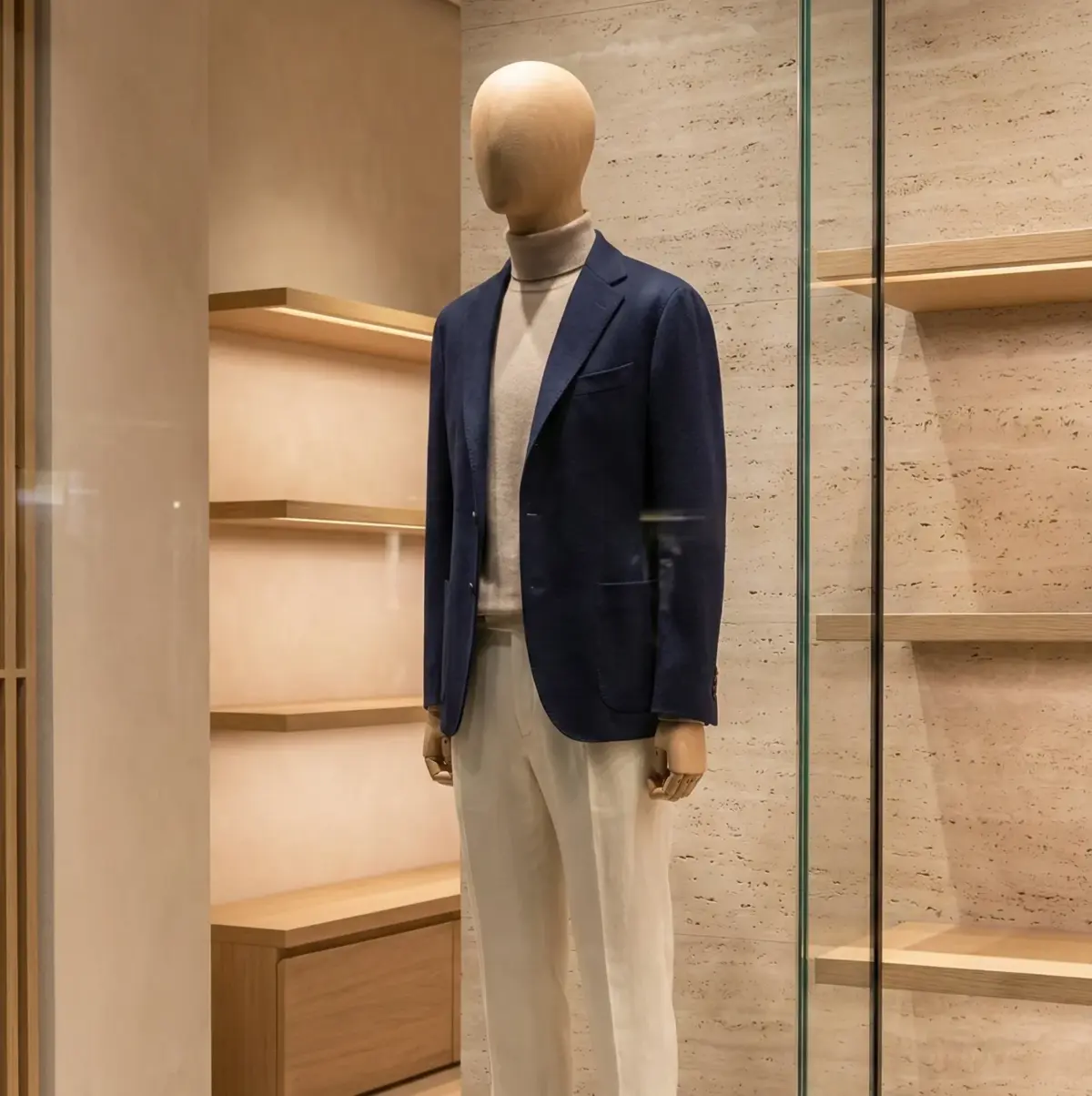
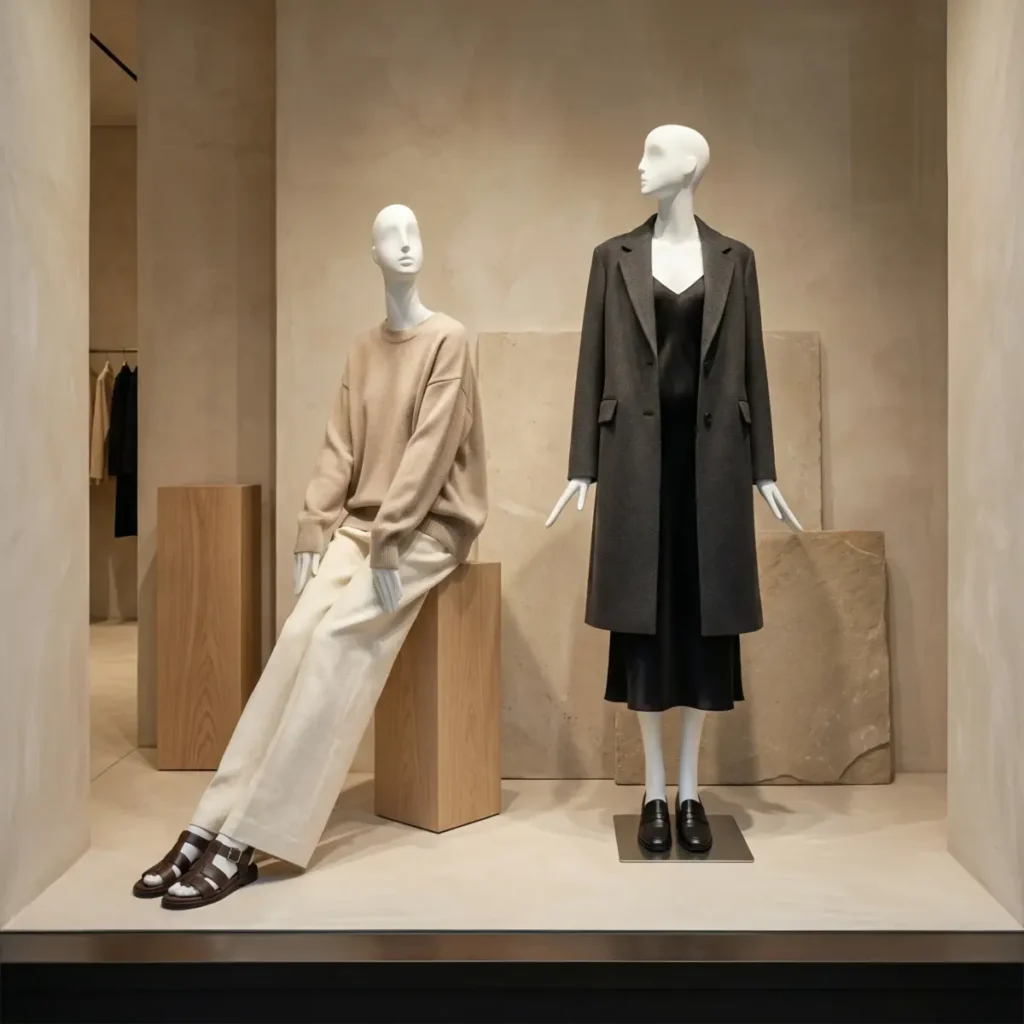
Custom clothing mannequins are widely used by fashion brands to enhance window display consistency and in-store visual presentation.
4. When Pose or Size Changes Are Required
If you need to modify the mannequin’s pose or proportions, the process becomes more complex. This typically involves:
- Model modification
- New mold development
As a result, production cost, lead time, and communication complexity will increase.
This option is usually chosen by:
- Large fashion brands
- Brands with high order volumes
- Brands that require strict display standardization across stores
5. Fully Custom Mannequin Development From Scratch
Some brands require a completely new mannequin design developed from zero. This process may include:
- Style and concept design
- 3D modeling
- 3D printing or clay sculpting
Due to the higher investment involved, this solution is typically adopted only by top-tier domestic brands or international fashion houses.
Why Working Directly With a Manufacturer Matters
For fashion brands and retailers, working with a custom clothing mannequins manufacturer offers far more flexibility than purchasing standard display models. Manufacturers can adjust materials, finishes, and accessories while keeping proven mannequin proportions and poses.
This approach helps brands maintain visual consistency across multiple stores and significantly reduces the risk of costly redevelopment. In most cases, starting from an existing mannequin design and applying targeted customization delivers the best balance between cost, lead time, and display performance.
Visual merchandising plays a key role in modern retail environments, influencing how customers perceive products and brand value.
Final Thoughts
Customizing mannequins does not always mean starting from scratch. For most brands, selecting a proven model and applying smart customization is the most efficient and cost-effective solution.
If you are also exploring different mannequin options, you may find our related product pages helpful.
As a professional retail mannequin manufacturer, we work directly with fashion brands and boutiques worldwide, supporting everything from basic customization to fully bespoke display solutions.
RFQ Details That Make Custom Clothing Mannequins Easier to Produce
Custom clothing mannequins become easier to quote and sample when the buyer describes the garment use and retail context clearly. For B2B buyers, the practical question is not only which mannequin looks attractive in a single photo. The stronger decision is whether the display form can support the brand’s store concept, garment category, lighting condition, sample approval process, repeat production, and export delivery without creating confusion between design intent and manufacturing reality.
A window display mannequin may need a different posture, base weight, fabric tone, or visual expression than a showroom torso or in-store fixture. This is where a specialist manufacturer matters. XINTU can review mood boards, store renderings, garment samples, fabric references, base concepts, and target market requirements before production. The result is a clearer technical brief for custom fabric mannequins, wooden-arm mannequins, display busts, and retail props.
What a Brand Team Should Specify
- Garment category, including whether the form must support jackets, dresses, pants, accessories, or complete outfits.
- Store environment, including window display, boutique floor, showroom, department-store area, or pop-up retail project.
- Material direction, such as linen, velvet, suede-like fabric, smooth textile wrapping, painted finish, or mixed-material styling.
- Body language, including neutral posture, premium minimal form, childlike proportion, male or female silhouette, or more expressive seasonal direction.
- Production requirement, including sample approval, order quantity, carton standard, delivery country, and repeat-order expectations.
How XINTU Connects Design and Production
XINTU uses the RFQ details to identify the right body form, material direction, arm solution, base structure, and packing method before sample development starts. Our role is to help the buyer move from inspiration to a repeatable product specification. That means documenting fabric color, proportion, base finish, arm style, packaging, and quality expectations before bulk production starts. For multi-store rollouts, the same confirmed standard can be reused so the brand presentation stays consistent across locations.
Explore related XINTU resources: custom fabric mannequins, custom mannequin manufacturing, selected fabric covered female mannequins, and the RFQ page for project review. If you are planning a new retail display program, include quantity, target finish, store type, and delivery timing in the inquiry so the quotation can be based on the real sourcing requirement.