


By the XINTU team, fabric-covered mannequin manufacturer in Shenzhen since 2003 · Updated November 2026
One of the first questions buyers ask is simple: what are mannequins made of? Two torsos can look alike yet differ in body material, surface finish, arms and base, and those choices change their weight, durability and how you can style them. This guide covers the main materials used in retail display mannequins and how to match them to your store.
At a Glance
- Fiberglass (FRP): rigid and dimensionally accurate, the most common body material for retail display mannequins.
- Polyurethane foam (PU): soft enough to take pins deeply, so it is mostly used for dress forms made for pattern cutting and sewing.
- Fabric cover: linen, velvet or cotton over the body gives a refined texture and reduces glare under store lighting.
- Jointed arms: shoulder, elbow and wrist joints let you change poses freely.
- Armless or non-jointed styles can also be fitted with jointed wooden or ABS arms.
1. Body Materials: Fiberglass and Foam
Fiberglass, or FRP, is plastic reinforced with glass fiber. It is rigid and keeps its shape for years. Shoulder lines and body contours can be formed precisely, so garments hang cleanly, and it stands up to the daily dressing and undressing of a busy store.
Polyurethane foam is soft and springy and accepts pins deeply, which is why it is widely used for dress forms built for pattern making and sewing. Because it is softer than fiberglass, shape retention is worth considering if the form will stand in a window or on a shop floor for long periods.
2. How Is a Fabric-Covered Mannequin Made?
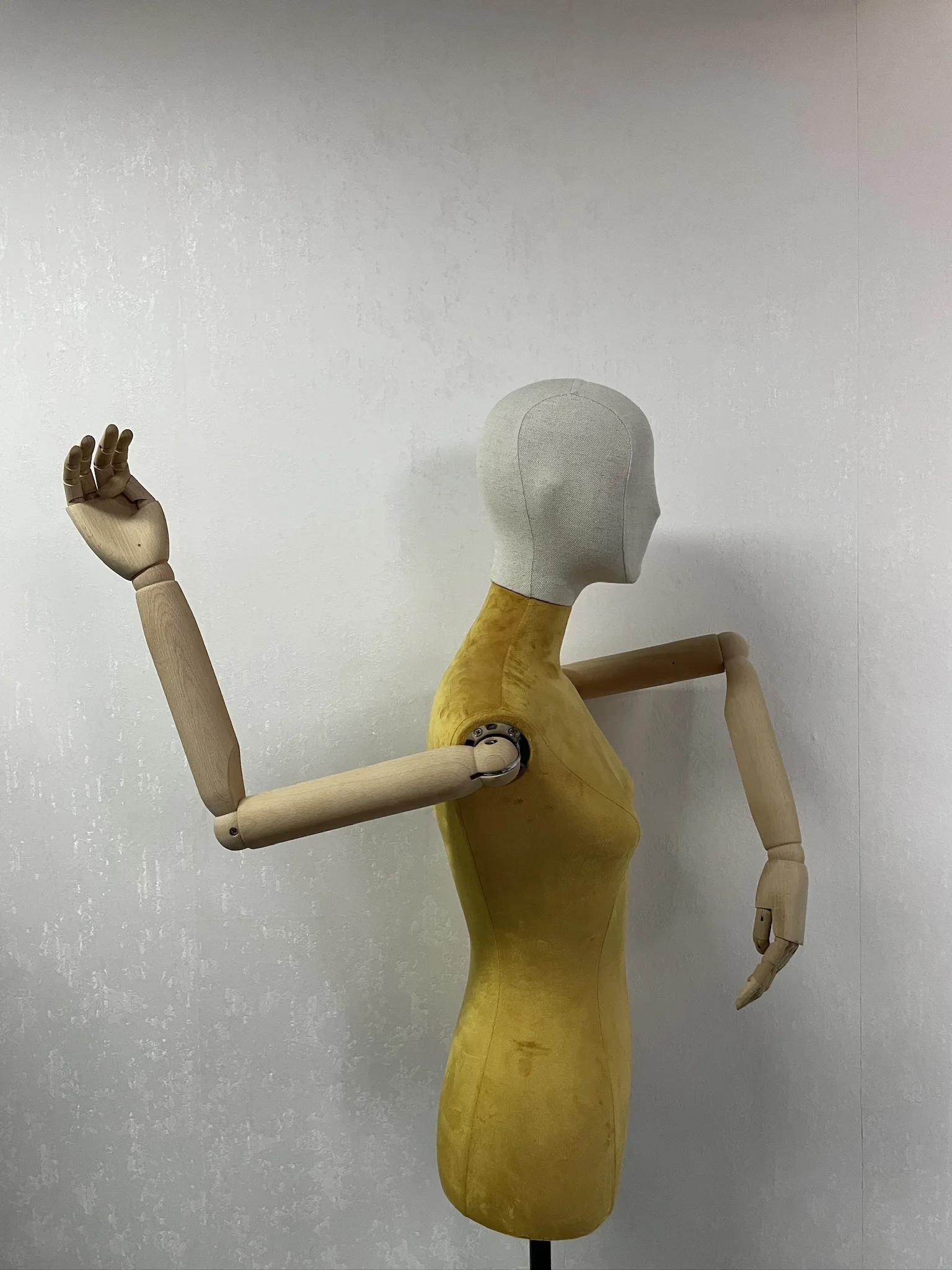
XINTU fabric-covered mannequins start with a fiberglass body that is covered in fabric by hand. On some models a thin layer of sponge sits between the fiberglass and the fabric, giving a soft touch with a little give. You can choose from more than 100 fabrics, including linen, velvet and cotton, or send us your own.
The real advantage of fabric is texture. It reflects less light than a painted finish, so the color and material of the clothes read more clearly, and the quiet texture of linen or velvet carries the mood of a brand.

3. Can You Pin a Fabric-Covered Mannequin?
Yes, but always insert pins at an angle. The body underneath is rigid fiberglass, so a pin can only go into the fabric and sponge layer; pushed straight in, it will stop at the fiberglass. Pins inserted at an angle hold excess fabric, accessories and even glasses in place.
Note that XINTU mannequins are made for store and window display. If you need to pin deeply for draping or sewing, a dedicated dress form made from polyurethane foam or a similar material is the better choice.
4. Arm Materials: Solid Wood, Wood-Grain ABS and Painted ABS
Jointed arms shape the whole impression of a mannequin. Most of our clients choose beech: its grain is even and fine, it looks understated and refined, and its high density makes it hard and resistant to cracking. Other solid woods are available on request.
The joints move smoothly, so you can set almost any pose, and the pose holds without the arms drooping. Instead of solid wood you can also choose ABS arms with a wood-grain finish, or ABS arms painted in your brand color. Any jointed arm, whatever the material, turns a mannequin into a fully poseable display.
Already using an armless or non-jointed model? Every armless and non-jointed XINTU style can be fitted with jointed wooden or ABS arms. The body line stays the same and you simply gain the ability to pose, which also keeps every mannequin across your stores consistent.
Related guide:
Mannequins with Articulated Wooden Arms: Poses, Styling and Buying Guide
5. Base Materials: Metal and Solid Wood
Bases are usually made of metal or solid wood. They typically weigh 4 to 6 kg and can be made heavier or lighter to suit your display. Shape and color can also be customized to match your store interior.
6. Which Material Should You Choose?
- Brand stores and windows: fiberglass body, fabric cover and jointed wooden arms for a refined texture and free posing. Even if you pick an armless style, jointed arms can be added.
- Small boutiques focused on tops and knitwear: a fabric-covered torso that takes up little space.
- Pattern making and sewing: a dedicated dress form that takes pins deeply.
Related guide:
How to Buy a Display Mannequin: Half-Body vs Full-Body, Fabric, Price, and Where to Buy
Not sure which material fits? Tell us what you will display, the feel of your store and the quantity you need. XINTU has made custom mannequins in Shenzhen since 2003, with samples in 7 to 15 days and production from 10 pieces.
Request a Custom Mannequin Quote