


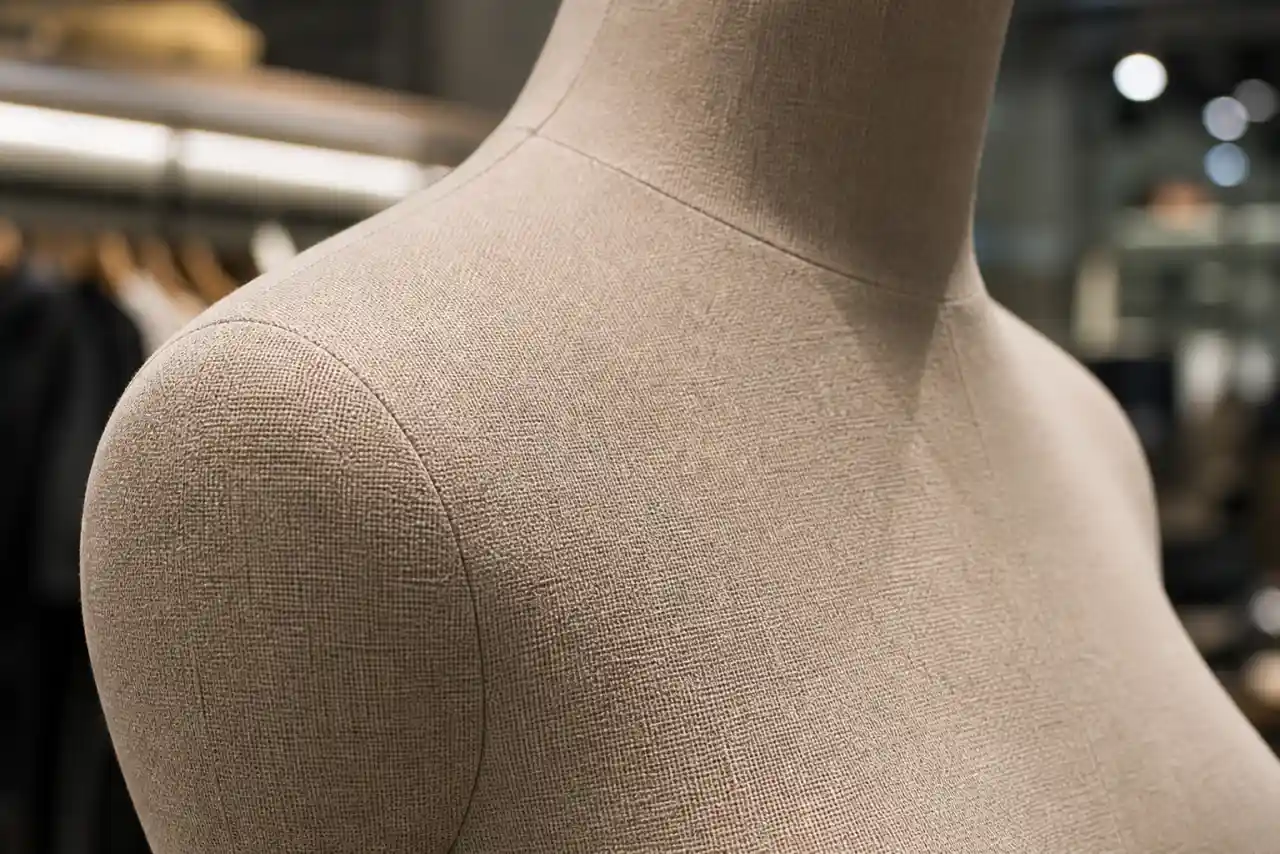
To brief a custom fabric mannequin supplier for a store rollout, buyers should define the garment category, visual direction, body proportion, finish language, quantity plan, and sample approval method before asking for pricing. That preparation matters because a rollout program is not only about choosing a mannequin that looks good in one showroom photo. It is about keeping finish, proportion, posture, and styling logic consistent across multiple stores and delivery batches. A strong supplier brief reduces sample revisions, makes quotations more comparable, and gives the supplier enough context to recommend the right fabric surface, arm structure, and base direction for the project. In practice, the clearest briefs are specific, visual, and operational at the same time.
Definition
A custom fabric mannequin supplier helps fashion brands and retail teams specify mannequin body shape, textile finish, posture, arms, base, and project details so the approved direction can be repeated through sampling and rollout production.
Why Rollout Briefs Fail
Most weak briefs describe a desired look but leave out operating details. A supplier may receive mood images, but not know whether the mannequins are for windows, in-store feature zones, or repeated boutique floor sets. That gap creates avoidable back-and-forth later.
Key Inputs Compared
| Brief Input | Why It Matters | Common Risk |
|---|---|---|
| Garment category | Shapes posture, shoulder line, and body proportion | Vague garment references produce mismatched samples. |
| Finish direction | Controls fabric texture, color, and luxury impression | Store lighting may expose a fabric choice differently than expected. |
| Rollout quantity plan | Helps the supplier judge repeatability and packing needs | Late quantity changes can disrupt timing and consistency. |
| Approval workflow | Defines how sample comments become final decisions | Unclear approval steps create revision loops. |
What the Supplier Needs Before Quoting
Start with the display purpose. Teams browsing the fabric mannequin category should explain whether the brief supports windows, boutique floor sets, launch capsules, or repeated seasonal programs. Then add garment references, desired silhouette, fabric tone, arm preference, and how often the store teams will restyle outfits.
How to Make the Brief More Actionable
Instead of saying “premium fabric mannequin,” describe what premium means for your project. Buyers reviewing custom retail display mannequins should define the intended visual mood, the degree of posture realism, and how the mannequin must work with rails, tables, platforms, and lighting. If your concept needs a more crafted expression, a fabric covered mannequin with wooden arms may be more suitable than a simpler arm structure.

Buyer Checklist
- Prepare front, side, and mood references for the intended display environment.
- State which garments and sizes the mannequins must support most often.
- Define finish tone, texture, and any non-negotiable styling details.
- Clarify quantity by phase, sample deadline, and target rollout window.
- Set the approval path for sample photos, comments, and final sign-off.
- Document packing or replacement expectations for repeat store programs.
Key Takeaway
The best supplier brief translates visual taste into production-ready decisions. When garment use, finish direction, and rollout operations are specified together, the supplier can quote more accurately and sample with fewer revisions.
Why Supplier Context Still Matters
Before sending files, buyers can review the XINTU custom mannequin manufacturer background to see whether the supplier discussion fits a custom retail-display workflow rather than a simple catalog purchase.
Plan Your RFQ
If you are preparing a rollout program, send a mannequin RFQ with display references, garment categories, finish direction, sample timing, and estimated quantities so the first supplier response is more useful.