



By the XINTU team, fabric-covered mannequin manufacturer in Shenzhen since 2003 · Updated November 2026
Quick answer: for most wedding dresses, the best choice is a fabric-covered female half-body mannequin that ends at the hip line, on a height-adjustable stand. It shows the bodice and neckline, lets the skirt and train fall freely, takes pins at an angle and is quick to dress. A stand rated for more than 30 kg holds any gown with room to spare. Choose a full-body form for slim mermaid or sheath gowns, and a male half-body form with upper legs for groomswear.
A wedding dress mannequin carries more than a garment. It has to hold a heavy gown without leaning, let the skirt and train fall the way they will on the day, and stay in good shape through many fittings and window changes each season. This guide covers which shapes work best for bridal and groom displays, what to check on the base, the fabric cover and pinning, the most common display mistakes, and how a custom order with a factory works.
What is the best mannequin for a wedding dress?
Most bridal boutiques use a female half-body mannequin that ends at the hip line, without thighs. The body shows the bodice, neckline and waist clearly, while the skirt falls freely over the stand, so a full ball gown, an A-line or princess skirt, or a long train is not pushed out of shape by legs underneath. Many visual merchandisers simply call these bridal bust forms.

A full-body mannequin is the better choice for slim silhouettes such as mermaid, trumpet, sheath and slip dresses, where the shape below the hips is part of the design. Our full-body female forms also carry the weight of a wedding gown on a standard base.
Half-body or full-body: a quick comparison
| Form | Best for | Strengths | Watch-outs |
|---|---|---|---|
| Female half-body, ends at the hip line | Ball gowns, A-line and princess skirts, long trains | Skirt falls freely; quick to dress; height adjustable from about 160 to 200 cm; easy to move | Does not show leg slits or the shape below the hips |
| Female full-body form | Mermaid, trumpet, sheath and slip dresses | Shows the full silhouette down to the hem | Slower to dress; legs can push full skirts out of shape |
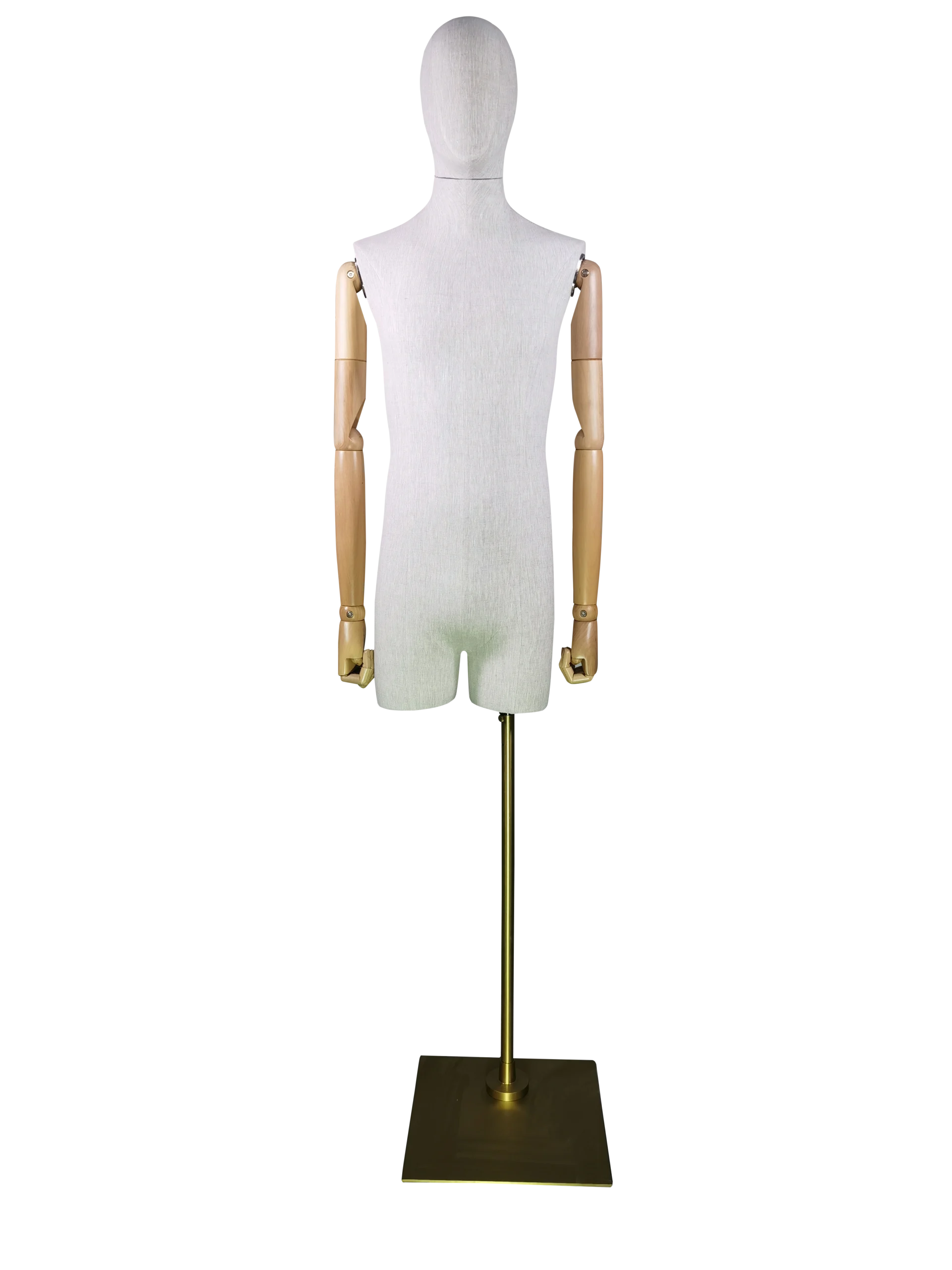
| Male half-body, to the upper thigh | Suits, tuxedos, groomswear | Trousers hang correctly; arms can pose hands in pockets | Not for full-length trouser hems |
Which mannequin works for groomswear?
For suits and tuxedos, a male half-body mannequin that continues to the upper thigh is the practical choice. The upper legs let trousers hang correctly under the jacket, and jointed wooden arms let stylists place hands in pockets or at the side for a relaxed, tailored look. A bridal form and a groom form side by side make a complete wedding window.
Can a mannequin hold the weight of a wedding gown?
Yes, if the stand and base are built for it. A wedding gown is heavy and its skirt spreads wide, so stability matters more than with everyday clothing. Our stands carry more than 30 kg, while a wedding gown and the mannequin together usually weigh 10 kg or less, so our female mannequins, half-body and full-body, hold a gown on the standard base. Standard metal bases weigh 4 to 6 kg; for very heavy gowns with long trains, or a mannequin in a busy walkway, the base can be made heavier, or lighter if you move displays often. The base finish, such as gold, silver or black, can match your boutique interior.
Can you pin a wedding dress to a mannequin?
On a fabric-covered mannequin, yes. Fabric-covered bodies accept fine pins inserted at an angle, so you can secure a veil, take in a sample gown at the back or hold a sash in place. Always insert pins at an angle rather than straight in. A fabric cover also suits bridal work better than glossy fiberglass, because the soft surface does not reflect harsh light next to white and ivory fabrics.
White or ivory linen, cotton and lace are popular covers for bridal stores because they look clean next to the gowns. Velvet in soft or deep colors works when the mannequin itself is part of the window styling. The cover can be made in almost any fabric or color, including your own textile, so it can match your brand palette.
Arms, head and neck options
- Armless: the fastest way to dress strapless and sleeveless gowns.
- Jointed wooden arms: for long-sleeve gowns, jackets and boleros, and for natural poses holding a bouquet or clutch. Plug-in arms come off in seconds for dressing.
- Abstract head: adds height and gives you a place to show a veil or headpiece.
- Headless with a neck cap: keeps attention on the neckline and bodice.
What size and height should a bridal mannequin be?
There is no single standard size for bridal mannequins, because every brand works to its own sample size. We offer many body shapes with different bust, waist and hip measurements to choose from, and can change the body shape and measurements to match your sample gowns, so they fit without heavy pinning. On the stand, the overall height adjusts between about 160 and 200 cm, and other heights can be made on request. Set it so the hem just touches the floor and the train lies flat; raise it slightly in a window so the gown reads from the street.
Common mistakes when displaying wedding dresses
- Using a glossy fiberglass form that reflects light onto white fabric.
- Putting a full ball gown on a full-body form, so the legs push the skirt out of shape.
- Pushing pins straight into the body instead of at an angle.
- Setting the stand too low, so the train bunches on the floor.
- Leaving white and ivory gowns in strong sunlight for weeks, which can yellow delicate fabrics.
- Mixing different mannequin shapes and fabric shades across stores, which weakens the brand look.
How a custom order works
- Send your brief: shape, sample size, fabric and color, arms, head and base.
- We confirm the details and make a first sample in 7–15 days.
- After you approve the sample, production starts from 10 pieces. The approved sample stays at our factory as the production reference.
Bridal brands that open several stores can keep the same fabric shade and body shape at every location.
Recommended models
- For bridal salons, ivory-white floral lace that ends just below the hips: White Lace Female Half Body Mannequin
- White linen cover that ends at the hip line: White Linen Female Torso with Head and Wooden Arms
- Velvet in any color, ending at the hip line: Velvet Female Torso Mannequin with Wooden Arms
- For suits and tuxedos, a quiet grey cover to the upper thigh: Grey Male Fabric Mannequin with Wood Arms
- Natural linen to the upper thigh: Linen Male Mannequin Torso with Dark Wooden Arms and Black Tripod
Browse more forms:
Fabric-Covered Female Mannequin Torsos · Fabric-Covered Male Mannequin Torsos · Fabric Mannequins
Frequently asked questions
Can a mannequin hold the weight of a wedding dress?
Yes. Our stands carry more than 30 kg, and a gown with the mannequin usually weighs 10 kg or less. Standard bases weigh 4 to 6 kg and can be made heavier for extra stability.
Can I pin a wedding dress to a fabric mannequin?
Yes, with fine pins inserted at an angle. Do not push pins straight in.
Is a half-body or full-body mannequin better for wedding dresses?
Half-body forms suit most gowns, especially ball gowns, A-line styles and long trains. Full-body forms suit slim mermaid and sheath styles.
How high should a wedding dress mannequin be?
The overall height adjusts between about 160 and 200 cm. Set it so the hem just touches the floor and the train lies flat, and raise it slightly in a window.
Is there a standard size for wedding dress mannequins?
No. Each brand uses its own sample size, so choose from our range of body shapes or have the measurements changed to match your gowns.
Can the mannequin cover match our brand colors?
Yes. Choose from more than 100 fabrics in our range, or send your own fabric.
What is the minimum order?
A first sample takes 7–15 days and production starts from 10 pieces.
Planning a bridal store or a new collection window? Send us your brief and we will suggest the right forms:
Request a Custom Mannequin Quote