


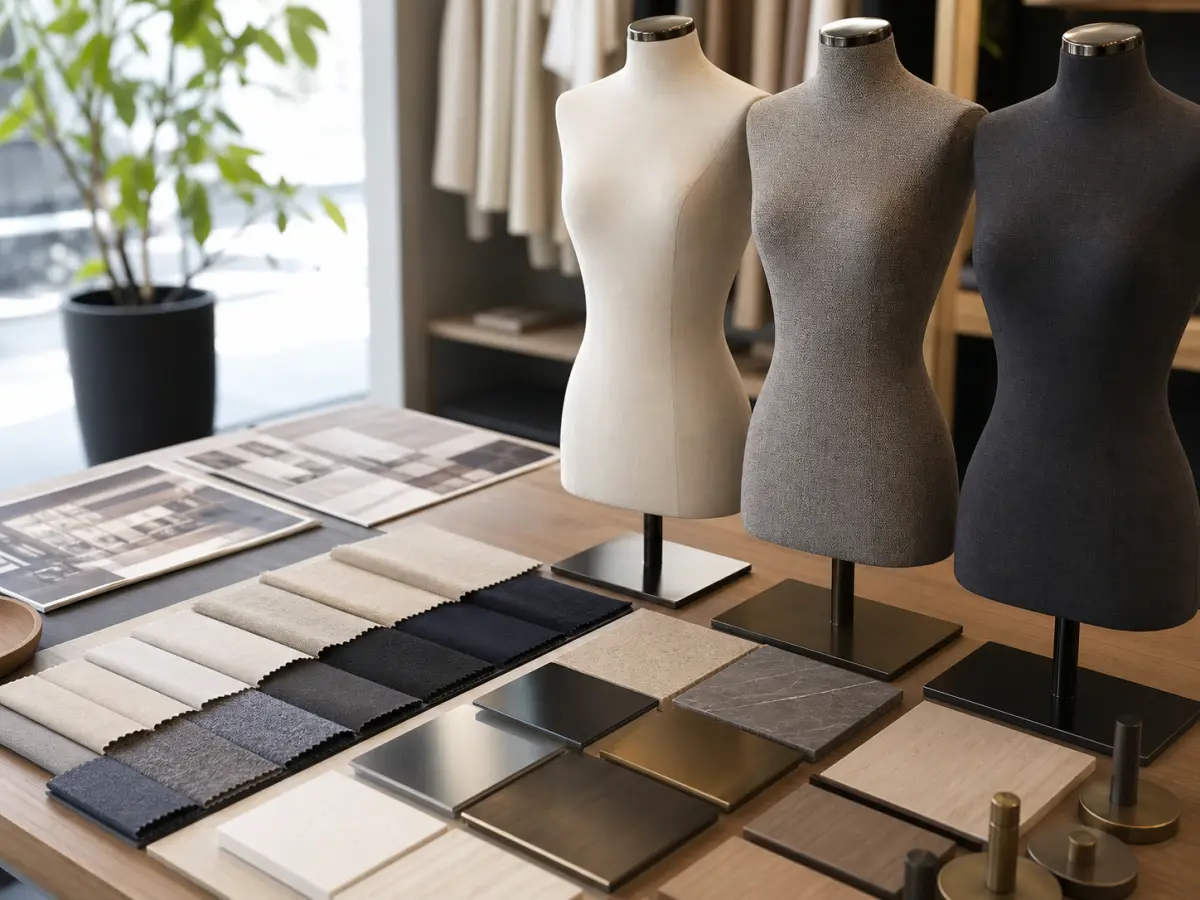
A retail mannequin material board helps buyers approve fabric, base finish, metal tone, and store palette before a custom sample is made. It reduces subjective comments such as “too warm” or “not premium enough” by putting the mannequin finish next to the actual retail materials. For boutique and luxury display projects, this step is useful because mannequins are viewed under store lighting, beside fixtures, and near garments. A good board makes approval faster and prevents costly changes after sampling.
What a Retail Mannequin Material Board Includes
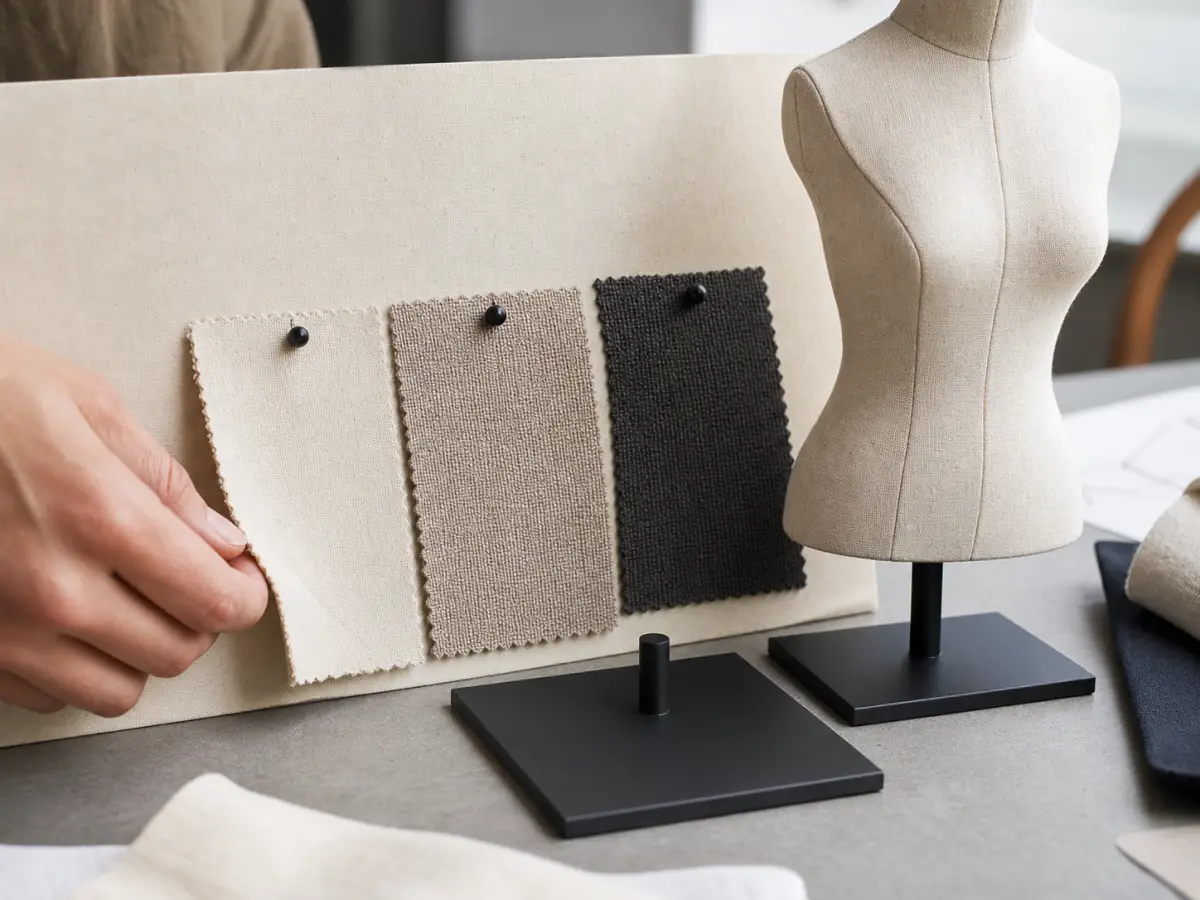
A useful board includes the mannequin fabric direction, seam or texture reference, base finish, nearby store materials, and lighting notes. Buyers reviewing fabric covered mannequins should avoid choosing fabric in isolation. The same neutral textile can look refined beside stone and metal, but flat beside warm wood or strong colored garments.
Material Board Comparison
| Board Element | Approval Purpose | Common Risk |
|---|---|---|
| Fabric swatch | Checks texture and color direction. | Looks different under store lighting. |
| Base finish sample | Coordinates with hardware and fixtures. | Metal tone feels inconsistent. |
| Store surface sample | Compares mannequin against the interior palette. | Finish blends in or clashes. |
| Garment reference | Tests product readability. | Mannequin competes with the garment. |
Buyer Checklist
- Place fabric swatches beside actual fixture or material samples whenever possible.
- Check matte, satin, and textured options under similar lighting to the store.
- Confirm the base finish before approving mannequin height or grouping.
- Use the main garment categories to test whether the mannequin supports the product.
- Record approved references so later bulk units follow the same visual direction.
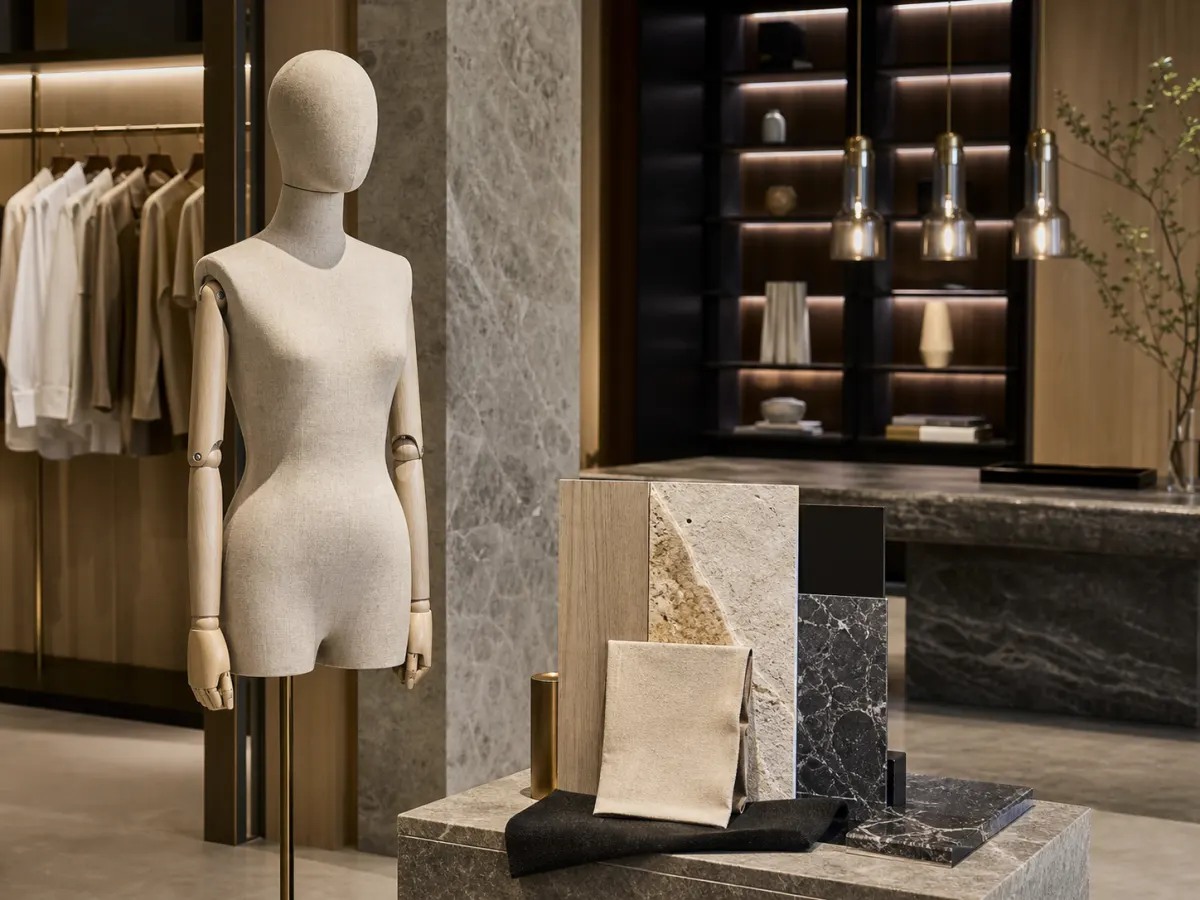
A material board is especially helpful when procurement, store design, and visual merchandising teams are all involved. It gives each team a shared approval language before requesting samples from a custom display partner. Buyers can review XINTU’s display mannequin options, then prepare a concise board with required finish references. The XINTU company background is best evaluated together with project-specific materials and display expectations.
Key Takeaway
Material board approval turns a style preference into a practical specification. It helps buyers judge whether the mannequin finish supports the garment, store palette, and premium display environment before production decisions become expensive.
To discuss a material board for a custom mannequin project, prepare swatches, fixture references, target quantities, and timing, then send the brief through the XINTU inquiry form. You can also review XINTU’s current display focus from the homepage.