


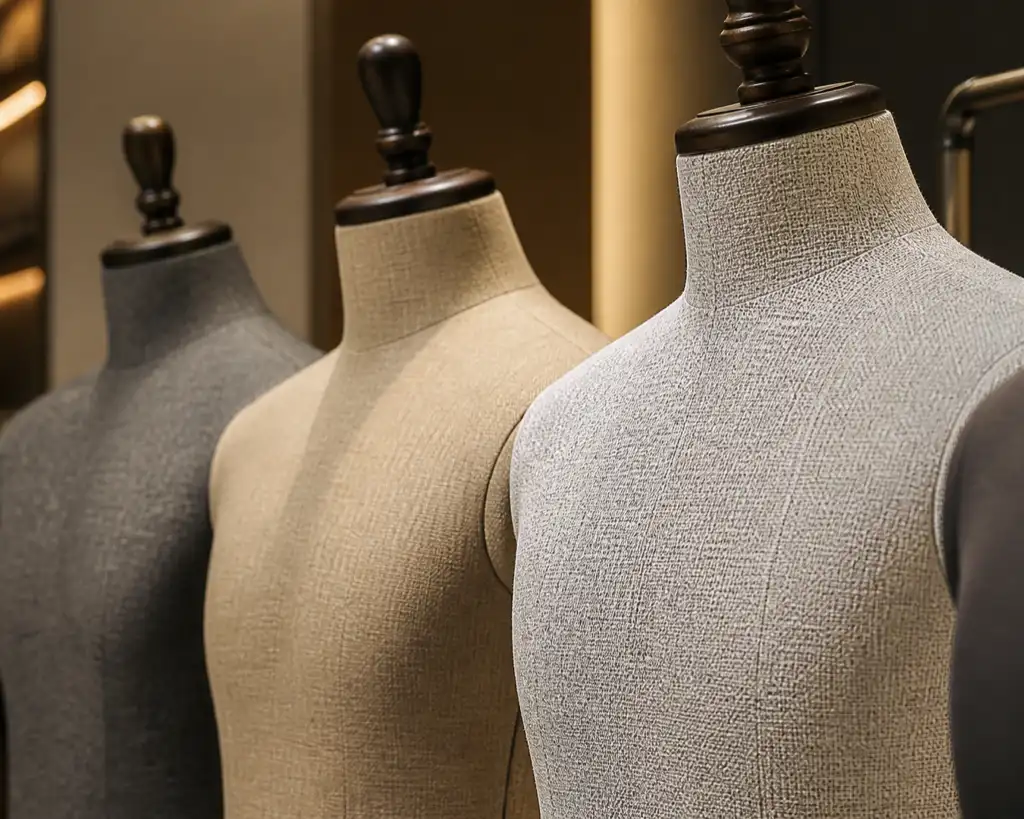
Buyers should choose fabric texture for premium display mannequins by matching the texture to garment category, store lighting, styling distance, and the brand mood they want customers to feel in the first few seconds. That means texture selection is not only a matter of taste. A rough linen, a soft matte weave, and a richer velvet-like surface each change how tailoring, accessories, and color stories read on the sales floor. The right texture can make garments feel more elevated and consistent, while the wrong one can compete with the merchandise or look flat under strong lighting. For most B2B projects, the best decision comes from reviewing texture, color, durability, and restyling practicality together before approving the sample.
Definition
Fabric texture for premium display mannequins refers to the visible and tactile surface character of the mannequin covering, such as smooth weave, linen-like texture, brushed finish, or richer textile surfaces used to support a luxury retail presentation.
Why Texture Choice Affects Display Quality
Texture influences how the mannequin supports the clothing rather than distracts from it. A boutique carrying refined tailoring may want a quieter surface so garment construction stays dominant, while a softer luxury concept may benefit from a warmer, more tactile mannequin finish.
Texture Directions Compared
| Texture Direction | Best Use | Main Risk |
|---|---|---|
| Smooth matte weave | Clean luxury presentations and tailored collections | Can feel too plain if the store concept needs stronger material richness. |
| Linen-like texture | Natural, crafted, or contemporary premium concepts | May read casual if paired with very formal merchandise. |
| Softer rich textile surface | Accessory-led or mood-driven premium storytelling | Can compete visually with detailed garments if overused. |
| Mixed texture program | Capsules needing hierarchy between hero and support displays | Inconsistent texture logic can make the rollout look unplanned. |
How Buyers Narrow the Options
Teams reviewing the fabric mannequin category should first decide whether the mannequin should disappear behind the clothing or add a subtle layer of material character. That decision usually depends on the fabric weight of the garments, how close shoppers stand to the display, and whether the concept relies more on silhouette or on atmosphere.
What to Review During Sampling
When buyers compare custom retail display mannequins, they should review the same mannequin under showroom light, daylight, and photography conditions. Texture that feels elegant in one setting may look too busy in another. If the project also uses crafted arm details, a fabric covered mannequin with wooden arms can help the team judge whether the texture supports or clashes with the other material finishes.
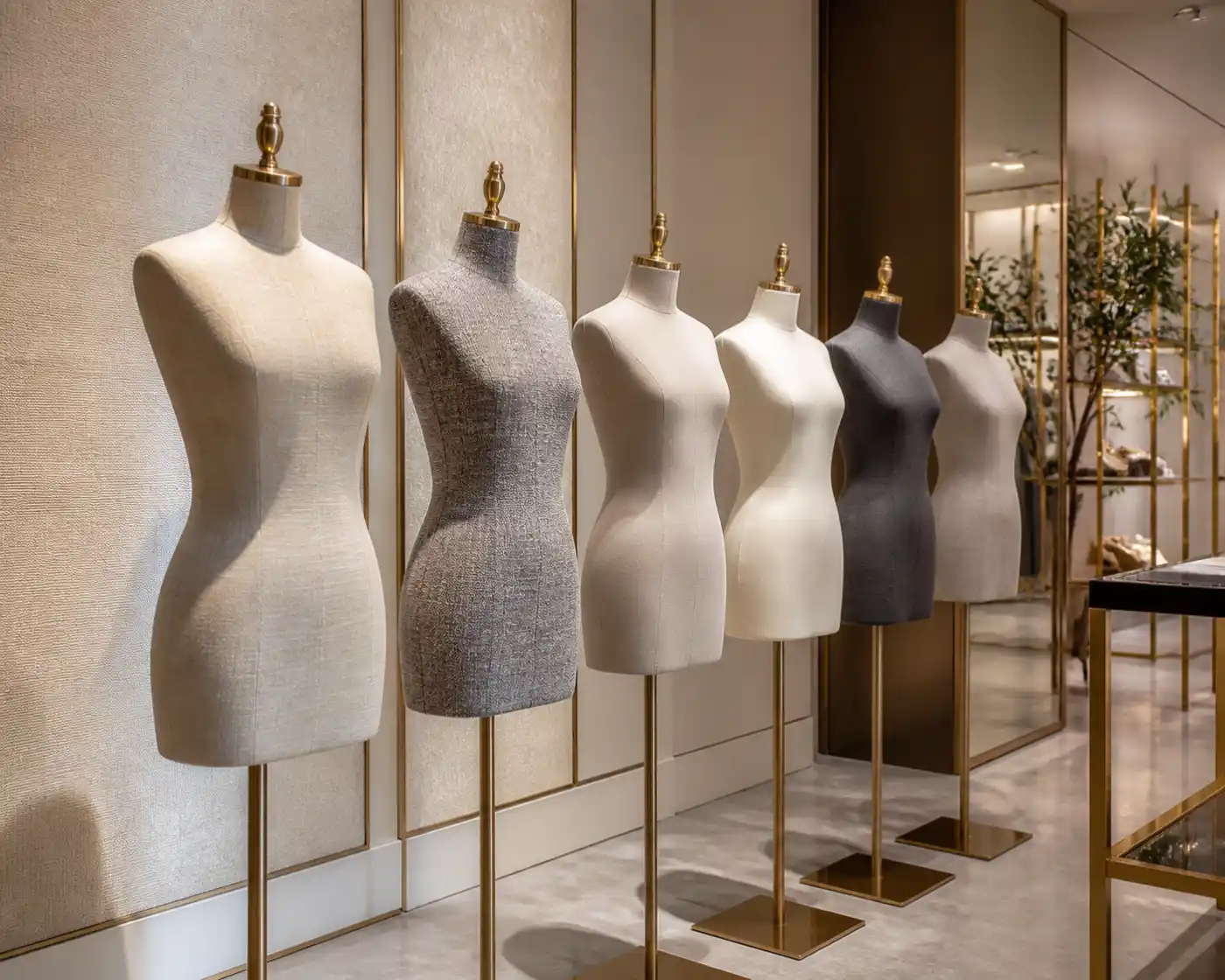
Showroom lineup highlighting different mannequin fabric textures in a premium retail context.
Buyer Checklist
- Match the mannequin texture to the store mood and garment category, not to trend language alone.
- Review the texture from both close range and normal customer viewing distance.
- Check whether lighting makes the surface look too flat, too reflective, or too visually heavy.
- Confirm whether the texture works across repeated locations, not only in one flagship scene.
- Test whether the fabric surface remains practical for restyling, steaming around garments, and daily upkeep.
- Approve texture together with color, arms, and base finish so the whole mannequin feels coherent.
Key Takeaway
The best mannequin texture supports the garment story without stealing attention from it. Buyers who compare texture under real lighting and with the actual display concept in mind usually make stronger and faster approval decisions.
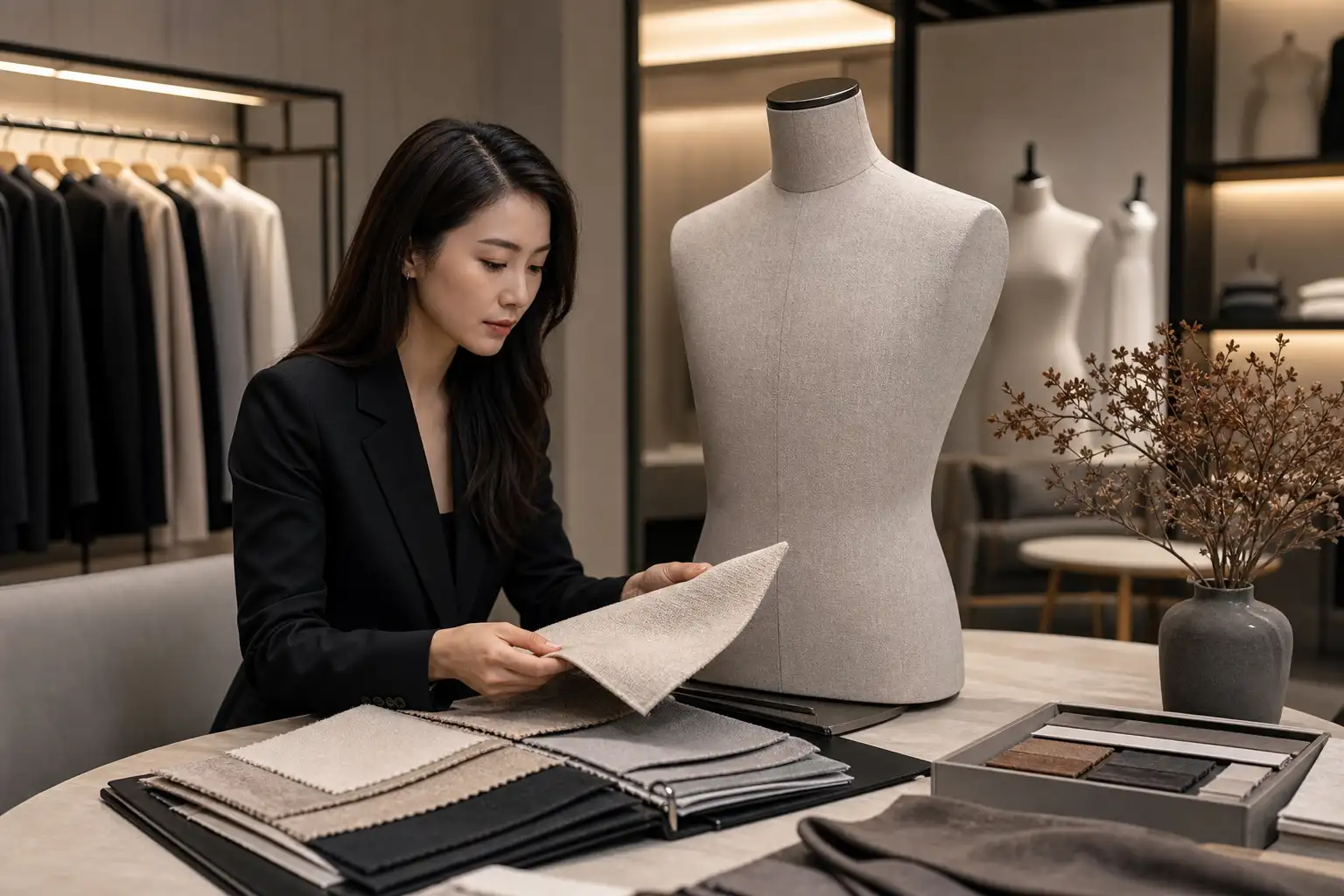
Buyer review scene with fabric swatches and a premium mannequin sample.
Why Supplier Context Helps
Texture choices are easier to evaluate when the supplier understands custom retail-display requirements. Reviewing the XINTU custom mannequin manufacturer background can help buyers frame the discussion around finish control, display use, and repeat production rather than only product photos.
Plan Your RFQ
If you are comparing premium mannequin finishes for an upcoming display program, send a mannequin RFQ with mood references, garment categories, preferred surface direction, and rollout context so the supplier can recommend the most suitable texture path.
Models that show these surface options: Floral Fabric Mannequin with Beech Wood Arms, Pink Velvet Mannequin with Beech Wood Arms, Pink Suede Necklace Display Bust, White Lace Female Half Body Mannequin