

For premium fashion brands and boutique retailers, a mannequin is never just a support for garments. It is a decision-making tool. It shapes proportion, creates mood, directs the eye, and signals whether a store feels mass-market or deliberately elevated. In 2026, the strongest retail display trend is not louder visual merchandising. It is more controlled visual storytelling: quieter materials, clearer silhouettes, modular display systems, and custom mannequin programs that support both brand identity and operational flexibility.
That shift matters for B2B buyers. Store designers want visual consistency across rollouts. Visual merchandisers need display systems that work in windows, shop-in-shops, and campaign launches. Brand teams need bespoke mannequin solutions that feel distinctive without becoming difficult to scale. The answer for many premium retailers is a tailored combination of custom mannequin development, fabric covered mannequin finishes, and refined display props that create a luxury impression while remaining practical for daily store operations.
If you are evaluating a new retail window mannequin program, opening a boutique, refreshing a showroom, or standardizing fixtures across markets, the right display strategy is not about buying a generic figure. It is about choosing a display partner that can translate your brand language into a repeatable physical system.
Trend: quieter luxury, stronger silhouette, smarter retail display
Across boutique fashion, contemporary retail, and premium department-store concessions, three visual directions are showing up again and again.
1. Texture is replacing shine
Glossy, highly reflective mannequin surfaces can still work in some commercial settings, but many fashion-led spaces are moving toward matte finishes, linen textures, boucle-inspired surfaces, and neutral fabric wraps. A fabric covered mannequin softens the environment and allows the product to lead. It also photographs better for omnichannel content, which matters when one installation is reused for website banners, Pinterest, and social campaigns.
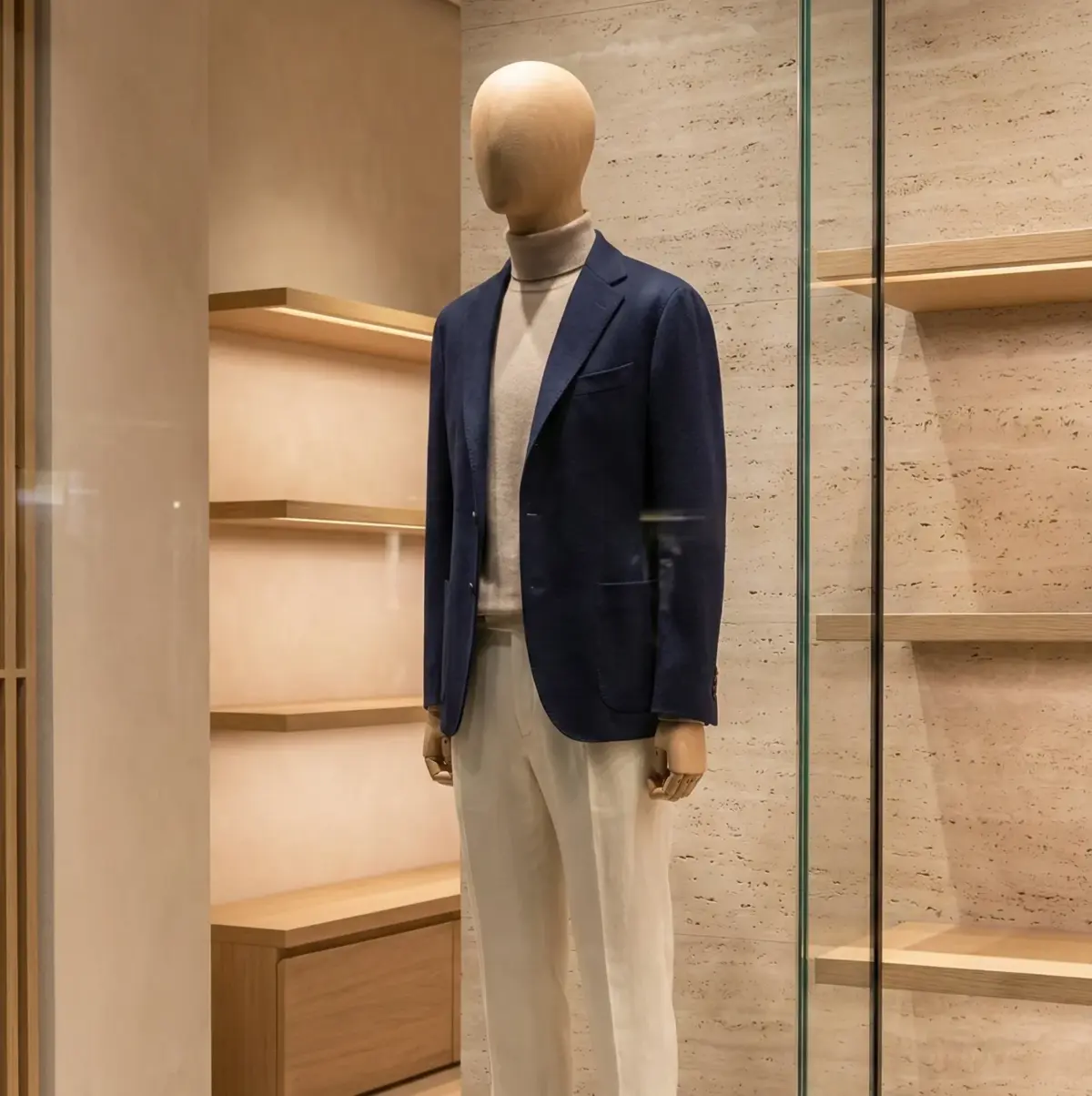
Retail use: a fabric-covered custom mannequin creates a quieter luxury backdrop for seasonal fashion stories and premium window concepts.
2. The body shape is becoming more brand-specific
Luxury and premium brands are paying closer attention to shoulder line, neck shape, posture, arm angle, and stance. Generic forms rarely reflect how a collection is actually styled. A bespoke mannequin allows brands to align fit presentation with the way garments are designed to fall, drape, or layer. That becomes especially important for tailoring, knitwear, occasionwear, and designer capsules.
3. Display systems have to work across multiple formats
A single campaign can now live in a flagship window, a pop-up, a wholesale showroom, and a digital lookbook. Buyers increasingly prefer custom mannequin and display prop systems that can be adapted rather than replaced. Detachable arms, interchangeable bases, transport-safe construction, and coordinated props all reduce friction for VM teams.
These trends point to the same conclusion: premium retail display is becoming more curated, more tactile, and more strategically customized.
Solution: build a display system, not just a mannequin order
When B2B buyers approach custom mannequin sourcing strategically, the conversation changes. Instead of asking for “a nice display mannequin,” the better question is: what kind of in-store decisions should this display help customers make?
For example, a boutique launching premium womenswear may need elongated proportions, a soft torso finish, and elegant hand positions that support draped styling. A multi-location menswear brand may need a retail window mannequin with stronger posture, stable metal bases, and wooden-arm options to create a tailored heritage feel. A concept store may need fabric mannequins plus plinths, risers, and coordinated retail display props that create a complete environment.
The most effective solution usually includes five design layers:
- Silhouette: body proportions, pose, shoulder width, and stance aligned with the collection.
- Surface: fabric, paint, texture, or mixed-material finish based on the brand mood.
- Details: head style, neck cap, arm material, fingers, hardware, and base finish.
- Function: durability, assembly, stability, garment handling, and transport efficiency.
- System thinking: compatibility with window themes, props, platforms, and rollouts.
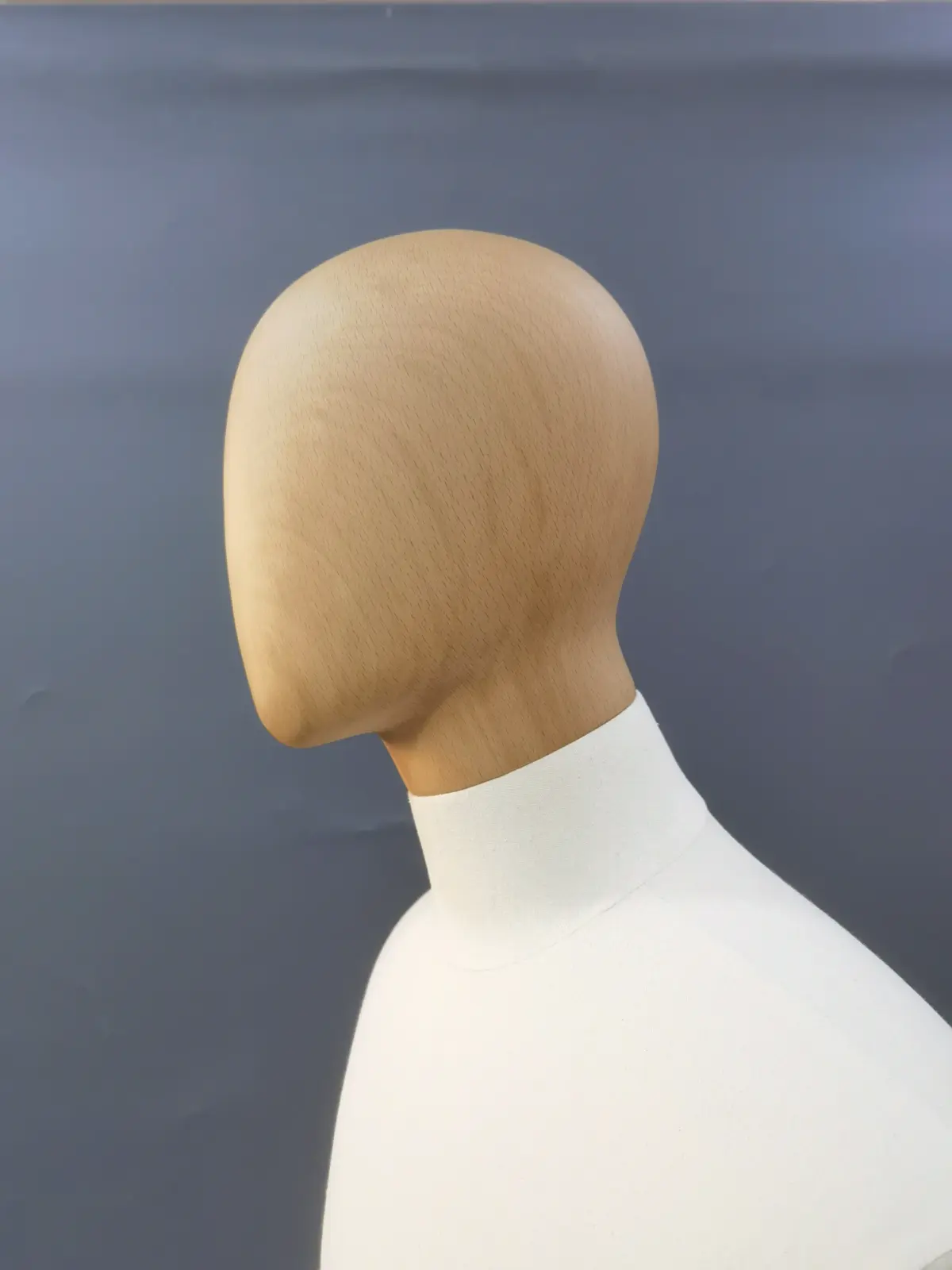
Retail use: detail-led materials such as fabric bodies and wood accents help boutique displays feel more premium without distracting from the collection.
This is where manufacturer capability matters. Brands do not only need a supplier who can produce a shape. They need a partner who understands how form, material, and merchandising logic come together in real retail environments.
Why choose a custom mannequin instead of a standard display mannequin?
Standard forms can be useful for basic needs, but they create limits as soon as a brand wants stronger visual identity. A custom mannequin offers advantages that directly affect customer perception and project efficiency.
Brand recognition
Distinctive posture and finish create visual memory. When a shopper sees repeated display cues across windows, pop-ups, and campaigns, the brand feels more coherent. That is particularly valuable for premium labels, boutiques, and concept stores where atmosphere influences buying confidence.
Better garment presentation
Different garments need different bodies. Structured jackets, bias-cut dresses, oversized knitwear, and occasionwear all sit differently on a form. A bespoke mannequin can be adjusted to support the intended silhouette, reducing awkward pulling, pinning, or restyling.
Higher-quality customer perception
In luxury retail, customers often judge product value through context before they touch the garment. A refined display mannequin with a fabric finish, clean detailing, and correct proportion can elevate perceived quality across the whole assortment.
More efficient rollouts
Once the prototype is approved, a custom mannequin program can be standardized across stores with consistent materials, dimensions, and replacement planning. That makes international expansion, seasonal refreshes, and VM training easier.
Better content value
Today’s in-store display is also content production. The same premium mannequin may appear in store photography, digital campaigns, Pinterest visuals, and trade presentations. Investing in the right display asset can create value far beyond the shop floor.
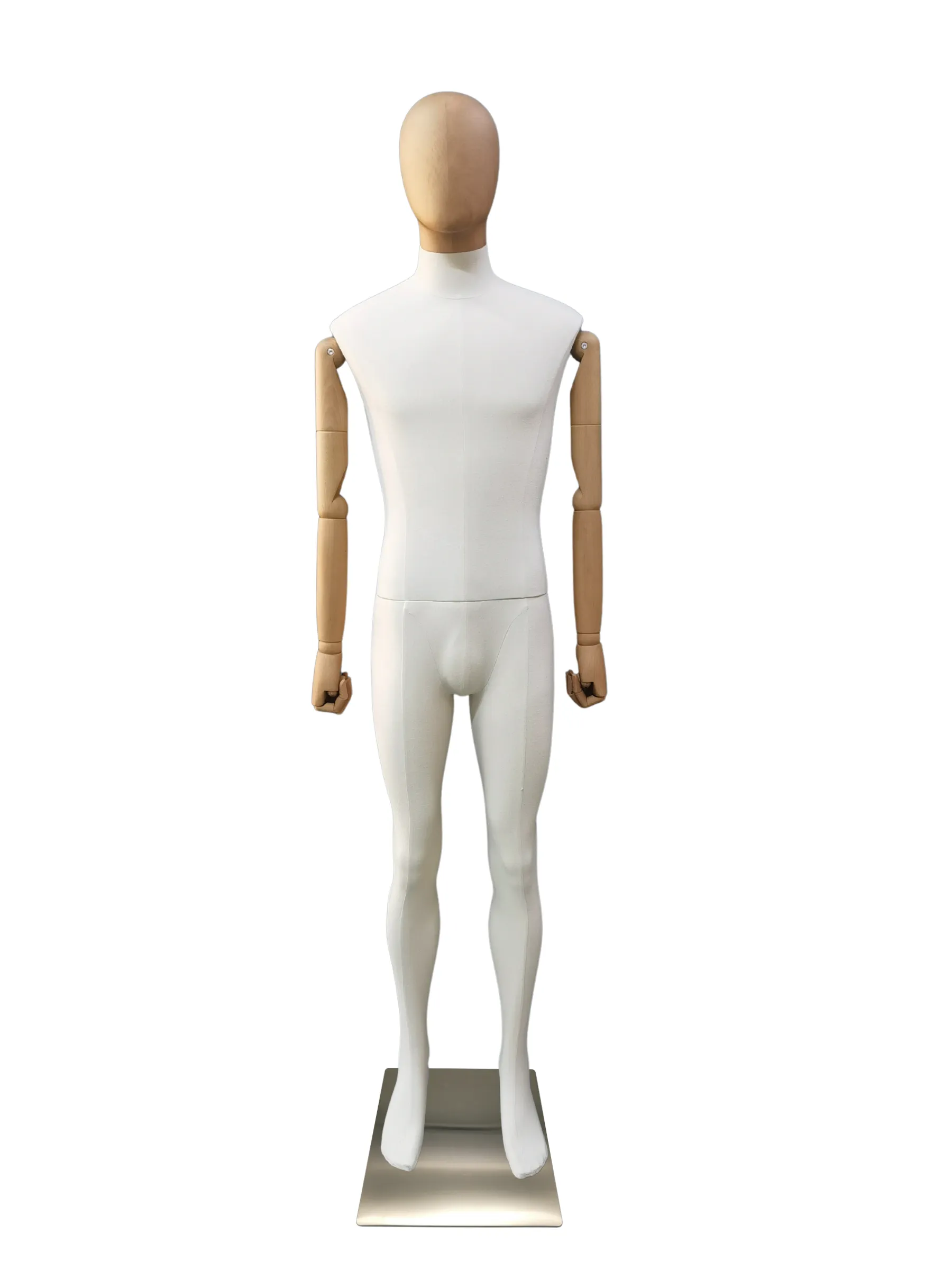
Retail use: a retail window mannequin with premium proportions and durable structure supports repeatable styling across stores and campaign launches.
Applications and use cases for brands, retailers, and designers
The strongest B2B mannequin projects are usually tied to a clear commercial use case. Here are some of the most common applications driving current demand.
Flagship and boutique windows
Windows need impact, but premium brands are increasingly choosing restraint over overload. Fabric-covered custom mannequins paired with clean plinths and selective props create elegant storytelling without visual noise. This is especially effective for tailoring, quiet luxury collections, occasionwear, and premium knitwear.
Shop-in-shop and department store environments
In shared retail settings, a distinctive display silhouette helps a brand stand out while staying consistent with premium standards. Modular custom mannequin systems are useful here because teams often need fast seasonal updates and efficient installation.
Showrooms and wholesale presentations
In B2B selling environments, mannequin presentation affects buyer confidence. Well-proportioned bespoke mannequins make lines look more complete, help communicate styling direction, and make a collection feel more market-ready.
Global rollout programs
When a brand is opening several stores or refreshing multiple markets, consistency becomes as important as aesthetics. A manufacturing partner able to maintain specifications across quantities, packaging, and timelines helps reduce risk.
Designer collaborations and capsule launches
Short-run projects often need a more distinctive visual language. Instead of reinventing the whole store, brands can use a dedicated custom mannequin or a coordinated set of luxury display props to signal the capsule’s identity.
For all of these applications, the commercial question is the same: will this display help the collection look more intentional, more premium, and easier to buy into? If yes, the investment is justified.
Conclusion: the right custom mannequin program creates inquiries, not just decoration
In premium retail, display is not background. It is sales architecture. The best custom mannequin programs support brand storytelling, improve garment presentation, simplify VM execution, and raise perceived value at the first glance. That is why fabric covered mannequin solutions, bespoke mannequin development, and coordinated retail display props are becoming central to boutique strategy rather than optional extras.
For fashion brands, retail store owners, visual merchandisers, and store designers, the practical takeaway is simple: choose display assets the way you choose materials, packaging, or store finishes. With the right partner, a display mannequin becomes a scalable brand tool rather than a one-off purchase.
If you are planning a new boutique concept, refining a retail window mannequin specification, or sourcing custom mannequin solutions for a multi-store rollout, contact XINTU. We help brands develop fabric mannequins, bespoke display forms, and luxury retail props that are built for real visual merchandising performance.
Need a quotation? Share your target market, quantity, preferred finish, and store concept, and we can recommend a custom mannequin direction that fits both your brand image and rollout needs.