

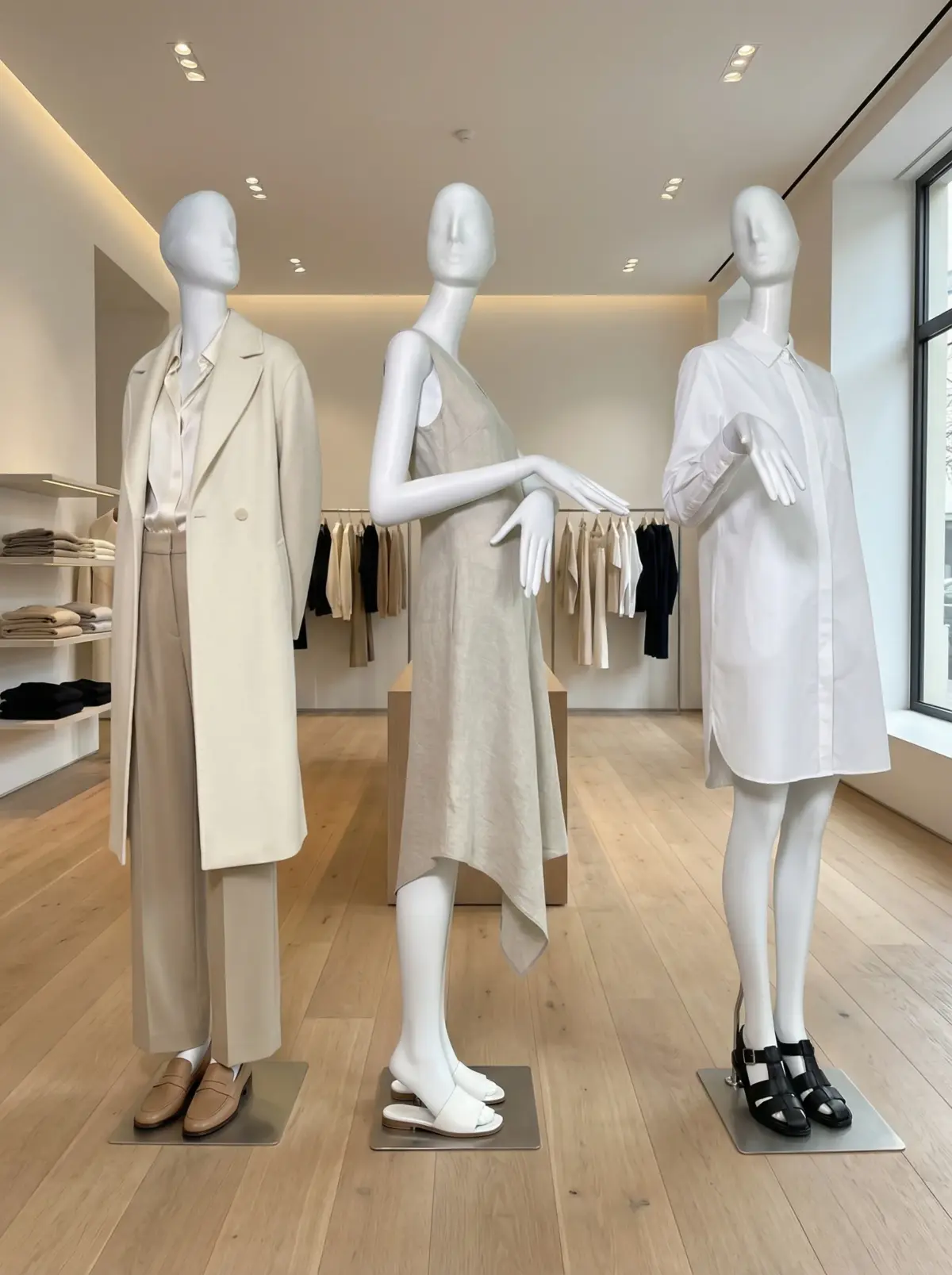
When you decide to choose mannequins for fashion brands, you are selecting more than just a display tool—you are choosing a silent ambassador for your brand’s DNA. In the competitive luxury retail market, the right silhouette can transform a window display into a high-converting visual experience.
Key Takeaways for Visual Merchandisers
- Quality First: Luxury brands prioritize fabric-covered mannequins for their tactile elegance.
- Customization: Partnering with a custom mannequin factory allows for unique brand storytelling.
- Functionality: Prioritize adjustable wooden arms for lifelike poses and easier styling.
1. Aligning with Brand Identity
Your brand’s aesthetic—minimalist, avant-garde, or classic—must dictate your choice. For high-end boutiques, fabric-covered mannequins (using premium linen or velvet) are the gold standard. They prevent delicate garments from slipping and provide a “couture” feel that plastic models simply cannot match.
2. Technical Excellence: Materials and Durability
As a leading mannequin supplier, XINTU emphasizes structural integrity. A high-quality mannequin should feature:
- Internal Structure: High-density, eco-friendly resin or fiberglass.
- Premium Finish: Hand-wrapped linen that withstands 10,000+ garment changes.
- Articulated Components: Adjustable wooden arms made from FAS-grade walnut or beech for dynamic posing.
3. The Value of a Custom Mannequin Factory
Modern retail requires differentiation. Choosing a custom mannequin factory like XINTU ensures your props are unique. From custom body measurements to branded logo engravings on metal bases, customization reinforces your authority in the fashion industry.
4. Case Study: Elevating a Luxury Boutique in London
Recently, a high-end brand collaborated with XINTU to replace their standard plastic displays. By opting to choose mannequins with custom linen upholstery and walnut articulated arms, the brand reported a significant increase in customer engagement. The tactile nature of the fabric-covered mannequins allowed their silk evening gowns to drape perfectly, proving that premium luxury retail display props are a key driver for retail success.
Frequently Asked Questions
Q: Why should luxury brands choose fabric-covered mannequins? A: They offer superior aesthetic value, prevent fabric slippage, and allow for easier pinning during the styling process.
Q: Can XINTU provide full customization (OEM/ODM)? A: Yes, XINTU specializes in bespoke designs, including custom measurements, specialized finishes, and branded hardware for global fashion houses.
Q: What are the benefits of adjustable wooden arms? A: They allow for realistic posing, making it easier to showcase accessories like handbags while adding an artisanal touch to the display.
Ready to transform your retail space? Contact XINTU Today to consult with our design experts on your next custom display project.
A Procurement Checklist for Fashion Brand Mannequins
Choosing mannequins for a fashion brand is a sourcing decision as much as a visual decision. For B2B buyers, the practical question is not only which mannequin looks attractive in a single photo. The stronger decision is whether the display form can support the brand’s store concept, garment category, lighting condition, sample approval process, repeat production, and export delivery without creating confusion between design intent and manufacturing reality.
The right specification connects garment category, store design, target market, color palette, texture, posture, base finish, and reorder planning. This is where a specialist manufacturer matters. XINTU can review mood boards, store renderings, garment samples, fabric references, base concepts, and target market requirements before production. The result is a clearer technical brief for custom fabric mannequins, wooden-arm mannequins, display busts, and retail props.
What a Brand Team Should Specify
- Garment category, including whether the form must support jackets, dresses, pants, accessories, or complete outfits.
- Store environment, including window display, boutique floor, showroom, department-store area, or pop-up retail project.
- Material direction, such as linen, velvet, suede-like fabric, smooth textile wrapping, painted finish, or mixed-material styling.
- Body language, including neutral posture, premium minimal form, childlike proportion, male or female silhouette, or more expressive seasonal direction.
- Production requirement, including sample approval, order quantity, carton standard, delivery country, and repeat-order expectations.
How XINTU Connects Design and Production
XINTU helps brand teams turn that checklist into a practical production brief, so sampling and bulk production can stay aligned with the approved retail concept. Our role is to help the buyer move from inspiration to a repeatable product specification. That means documenting fabric color, proportion, base finish, arm style, packaging, and quality expectations before bulk production starts. For multi-store rollouts, the same confirmed standard can be reused so the brand presentation stays consistent across locations.
Explore related XINTU resources: custom fabric mannequins, custom mannequin manufacturing, selected fabric covered female mannequins, and the RFQ page for project review. If you are planning a new retail display program, include quantity, target finish, store type, and delivery timing in the inquiry so the quotation can be based on the real sourcing requirement.
Full-body and seated models to compare: Linen Wrapped Full Body Mannequin, Linen Female Full Body Mannequin, Seated Fabric Female Mannequin, Seated Male Linen Mannequin with Dark Arms