

A fashion brand or store buying mannequins usually runs into three questions first: half-body or full-body? Fabric-covered or fiberglass? And why do prices range from a few dollars to several hundred per piece? This guide takes the three in buying order, then explains the buying channels available and who each one suits.
What a display mannequin is, and how it differs from a tailoring form
A display mannequin (dress form) is a torso or full figure built to human proportions for presenting finished garments. In stores, windows, showrooms and e-commerce photography, what matters is the silhouette, the proportions and the surface finish, so a garment hangs as it would on a person. A tailoring form is a different tool: it is made for pinning and pattern work, often adjustable, and its appearance is secondary. This guide is about the first kind, the retail display mannequin. XINTU makes only that kind; we do not make pattern-making forms.
Half-body or full-body?
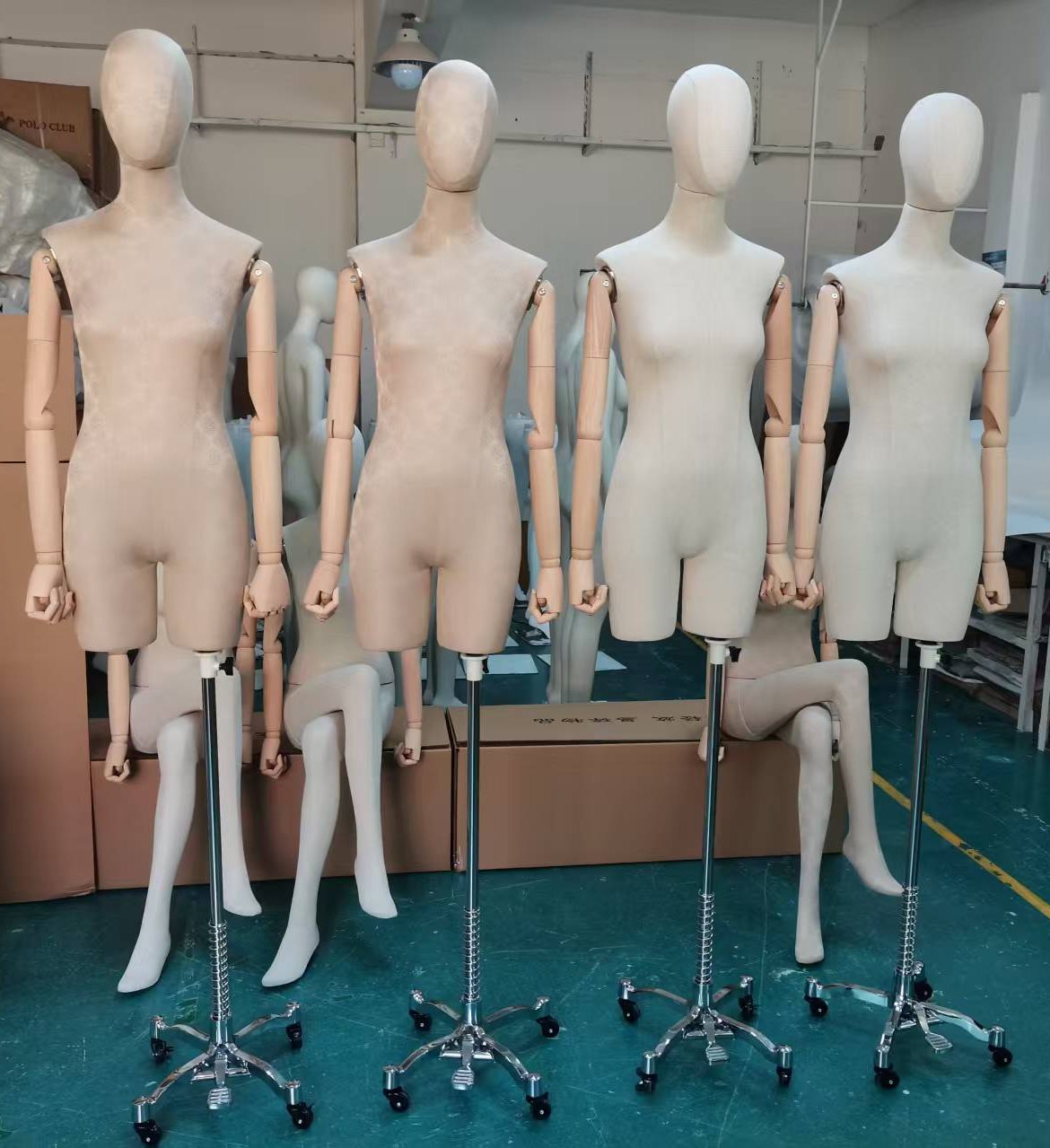
Un half-body mannequin (torso form) runs from the neck to the hips and sits on a counter, a shelf or a tabletop. It suits tops, knitwear, shirts and accessories, and it is the most common form for flat-lay and detail shots in e-commerce. It takes little space, costs less per piece and is easy to move; a small store can lay out its key pieces on three to five of them.
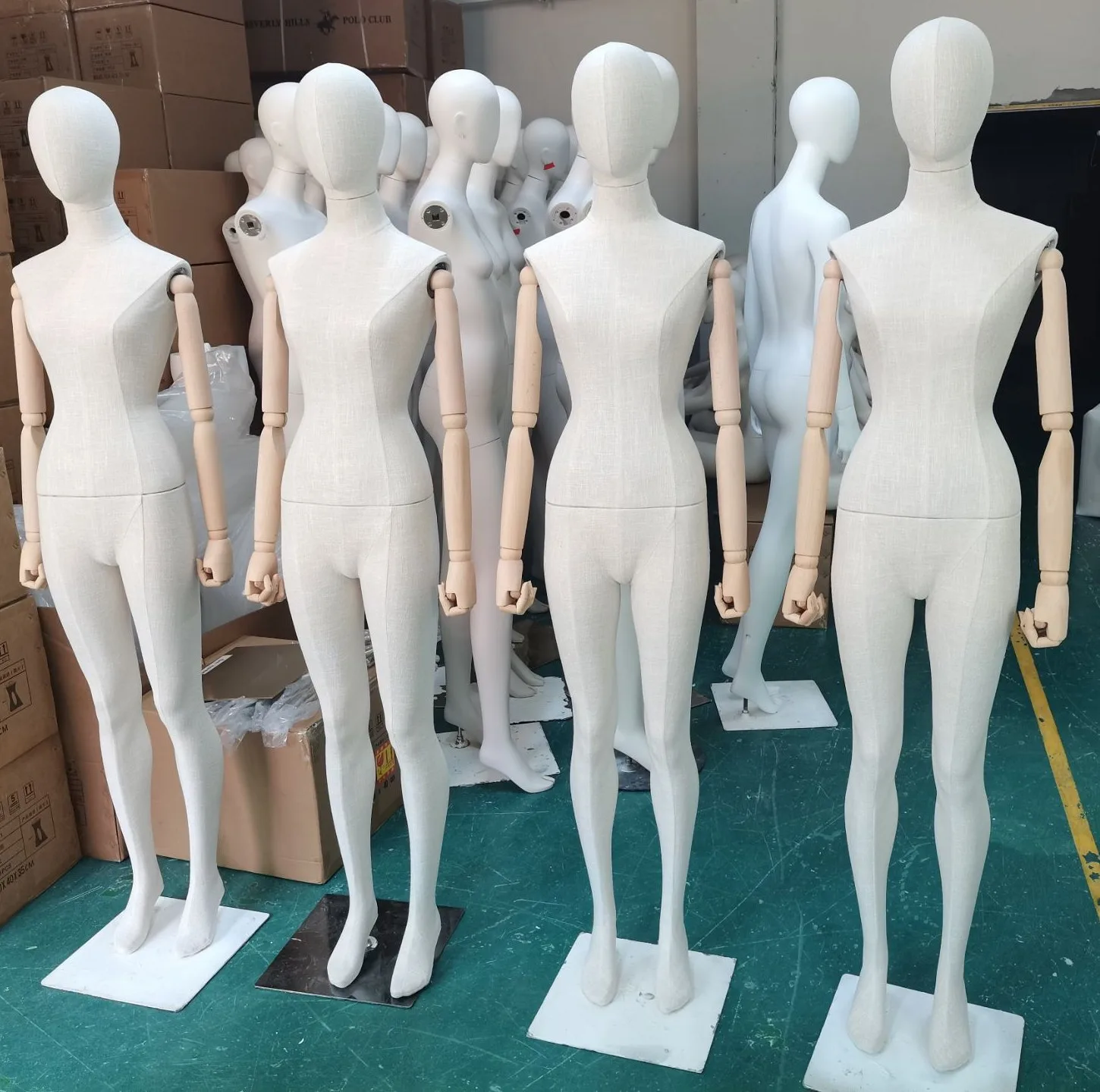
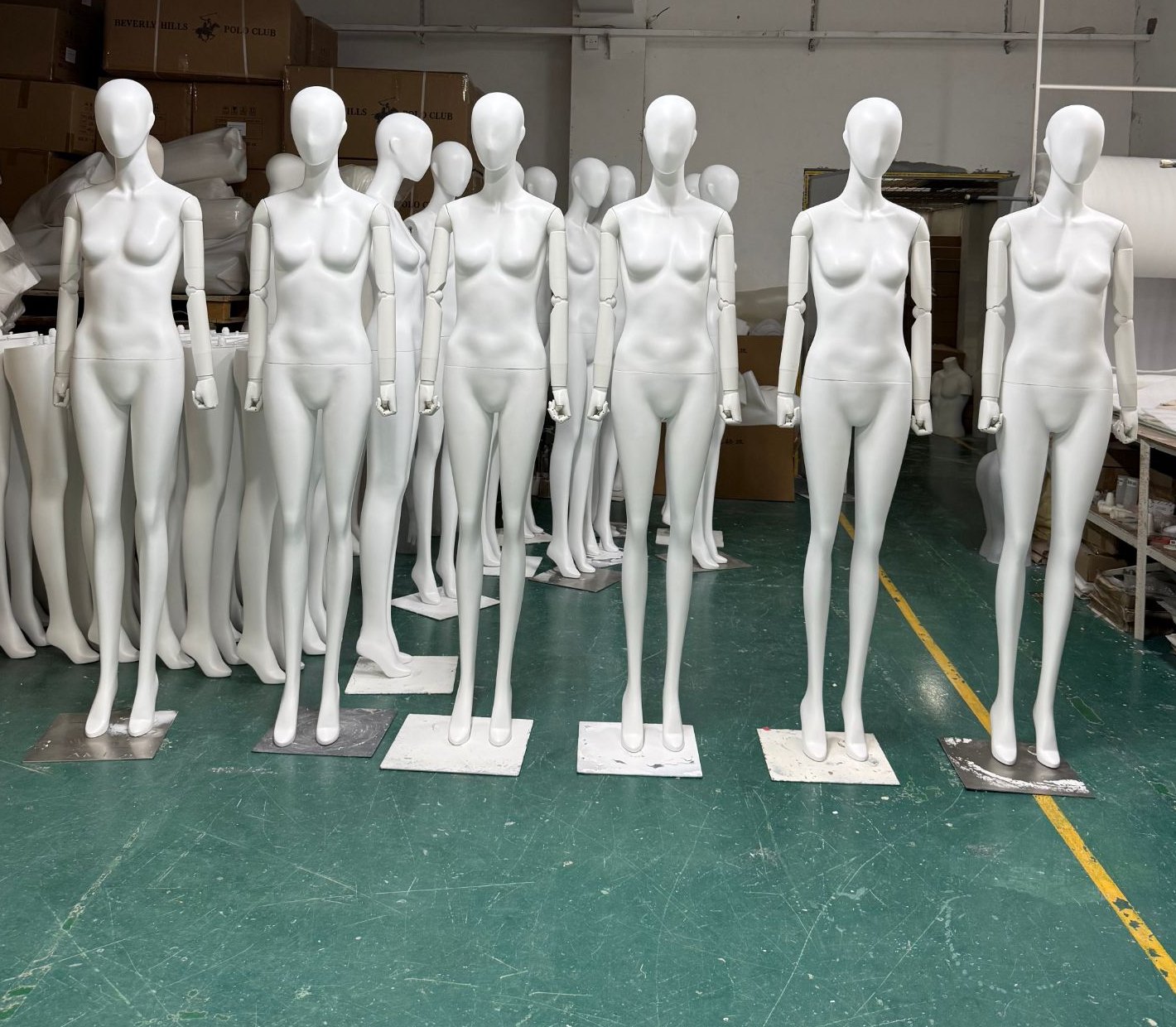
Un mannequin en pied includes legs and a base and presents a complete look: coat, dress, trousers and shoes together. Windows and store entrances almost always use full-body figures. The visual impact is complete, but so is the footprint and the freight, so measure the window depth and the aisle before you order.
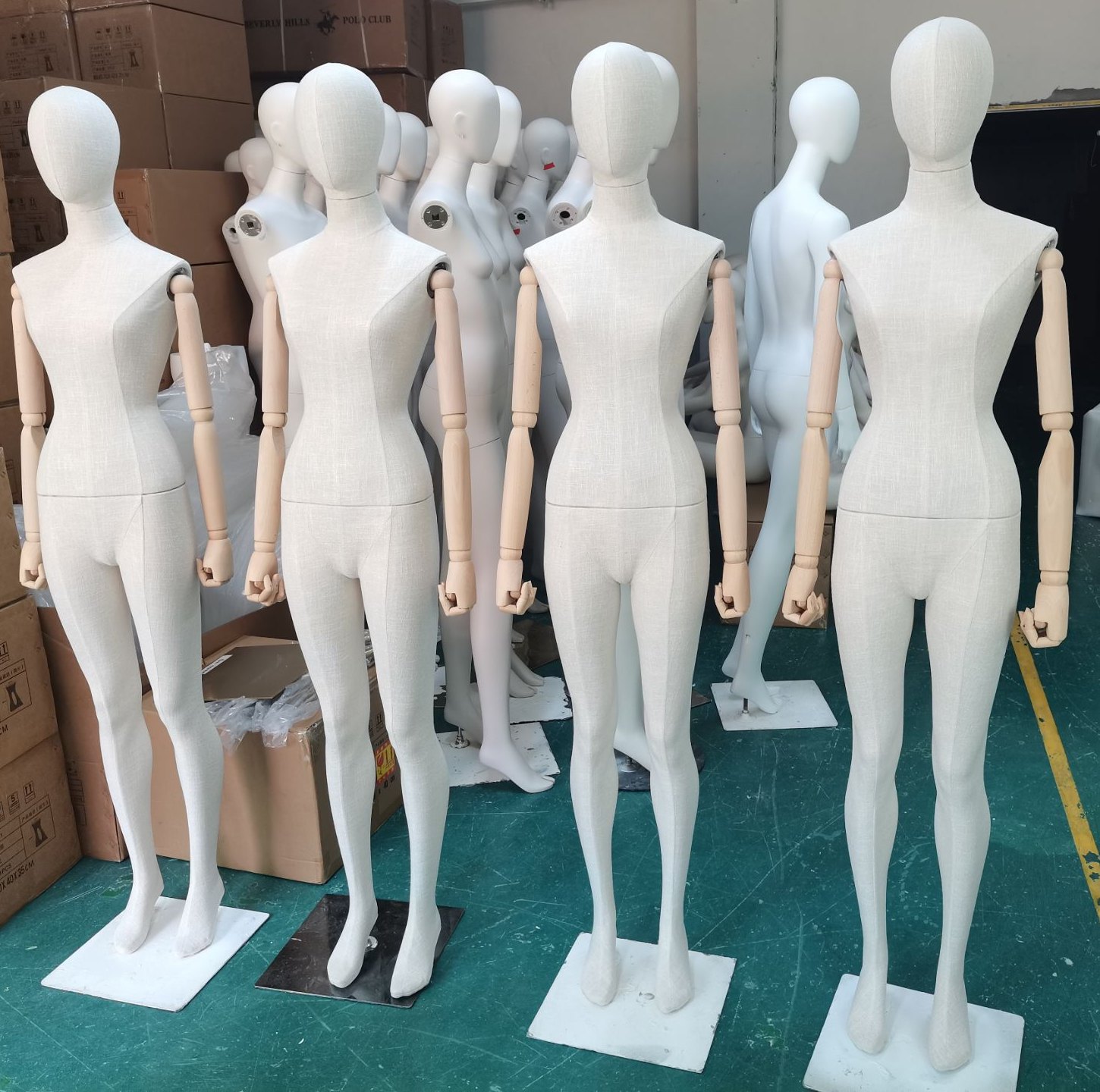
How to choose: tops and accessories, limited space, photography, go half-body. Full outfits, a window or an open-plan store, go full-body. Most brand stores run both: full-body for the window, half-body for counters and shelving.
Fabric-covered, fiberglass or foam: what each price tier buys
Most of the price difference between mannequins comes from the body material and the surface:
- Foam or PU forms are the cheapest and are common on marketplaces. They suit short events and very tight budgets. The fabric is thin, seams show, and they deform with use, so they are not suited to a brand store.
- Fiberglass mannequins are rigid and can be sprayed in any colour and gloss. They are the norm in mass-market and fast-fashion stores: uniform and durable, but the surface is hard and cold, garments lose the softness fabric gives them, and you cannot pin into the body.
- Mannequins de vitrine gainés de tissu have a rigid body hand-upholstered in linen, velvet or cotton. They are the standard for luxury and designer stores. The fabric takes pins, so you can adjust drape and waist fit; the colour and fabric can be specified to match the store interior and the brand palette. Everything XINTU makes is in this category, which is why our products are named mannequins de vitrine gainés de tissu.
If the store has to match a brand image, if you need to adjust how garments fit, or if the figure will stand in a window or in front of a luxury counter, fabric-covered is the only reasonable choice. For a short event or a market stall, foam or fiberglass is enough.
What sets the price of a mannequin
Mannequins have no list price. Two half-body fabric-covered forms can differ widely because of five things: the form (half-body, full-body, seated), the fabric (linen, velvet, cotton or your own material), the arms (fixed, painted or articulated wooden arms), the base (tripod, hanging, square metal or wood) and the quantity. How each factor moves the price, and how the sample locks the price before production, is covered item by item in How Much Does a Custom Mannequin Cost?
List all of these conditions before you ask for quotes; otherwise quotes from different suppliers cannot be compared. One may be quoting a foam torso and another a linen-covered form with wooden arms. The price can differ tenfold, but they are not the same product.
Where to buy a mannequin: three channels and who each one suits
1. Marketplaces
Marketplace listings are mostly foam, PU and some fiberglass forms. Prices are transparent and delivery is fast, which suits individual sellers, market stalls and one-off events. Specifications and fabric quality vary, colour differs between batches, and it is hard to keep several stores consistent.
2. Local display-fixture dealers
Most markets have dealers that specialise in retail fixtures. They stock fiberglass and fabric-covered forms, you can see the piece in person and collect the same day, and you can pair it with hangers and shelving. This suits a single store opening, small top-ups and urgent needs. Stock styles and colours are fixed, so there is little room for customisation.
3. Factory-direct custom order
If you need a specific fabric, colour, body proportion or arm type, or you are buying for several stores at once, ordering directly from the manufacturer is the most economical route and the one that keeps everything consistent. XINTU is a fabric-covered mannequin factory in Shenzhen: hand-upholstered, minimum 10 pieces, a sample in about 7 days, production after you approve the sample, and shipping direct from Shenzhen. Store mannequins for LOEWE, LANVIN and Loro Piana were made this way.
Buying in Taiwan
Buyers in Taiwan have all three channels. Online marketplaces carry the lowest tier, mostly foam and PU forms. Local display-fixture dealers stock fiberglass and fabric-covered forms for same-day pick-up. For brand image, multi-store consistency or any customisation, ordering factory-direct is the better route: one sample fixes fabric, colour and proportions, and XINTU ships from Shenzhen to Taiwan. One to three pieces, urgent or on a tight budget: use a marketplace or a dealer. Brand work, several stores or custom specifications: go to the factory.
Checklist before you order
- Size: shoulder width, bust, waist and height must match your garment sizing, or clothes will look tight or slack.
- Arms: articulated wooden arms can be posed and photograph well; fixed arms cost less but give one pose.
- Base: a tripod base is height-adjustable; a square metal base is the most stable; a hanging base suits shelving and walls.
- Fabric and colour: approve a swatch first. Linen reads natural, velvet reads luxury, and dark fabrics hide marks best.
- Quantity and lead time: custom pieces have a minimum order and a sampling period, so count back from the opening date.
- Expédition : full-body figures are bulky; confirm packaging and delivery terms first.
Questions fréquentes
Q: Is a dress form the same thing as a mannequin?
A: For display purposes, yes. Stores and fixture dealers often say dress form or display form; manufacturers and brands usually use the product name, for example half-body fabric-covered mannequin. A tailoring form for pattern-making is a different tool.
Q: Is a half-body mannequin suitable for e-commerce photos?
A: Yes. A half-body fabric-covered form is the most common prop for flat-lay shots of tops, knitwear and accessories. The fabric takes pins, so waist and drape can be set exactly.
Q: How does a custom order with XINTU work?
A: Tell us the form, fabric, arms, base and quantity. We quote and make a sample in about 7 days; after you approve it we go into production, minimum 10 pieces, and ship from Shenzhen. Use the quote form on the site or email us.